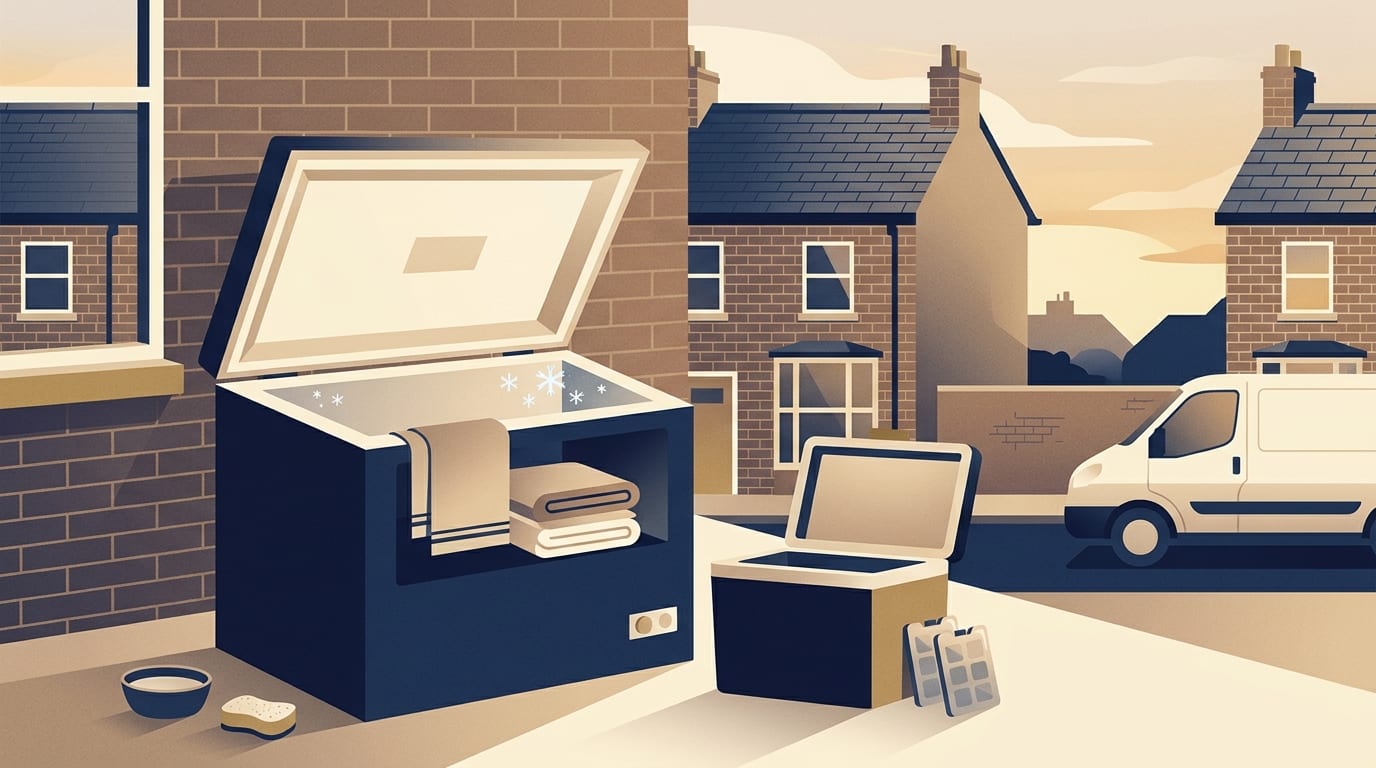
To defrost a freezer quickly and safely, switch the appliance off, unplug it from the socket if possible, and move your food into cool bags or an insulated box packed with ice packs. Leave the freezer door wide open and let the ice melt naturally. If the ice has not built up too much, this process should take two to three hours. You must never use electrical heat or sharp knives to speed up the melting process.
How often to defrost a freezer
Manual defrost models should be defrosted once or twice a year as a routine maintenance task. You should also plan to defrost the appliance as soon as ice build-up becomes noticeable inside the compartments.
Frost-free models do not usually require defrosting at all. If you are unsure which type of freezer you own, check the manufacturer instructions before you start pulling out drawers. If a frost-free model keeps frosting up, it is a job for the manufacturer or a qualified engineer rather than a routine defrost.
Leaving ice to build up makes the job longer, so defrost as soon as the build-up becomes noticeable.
Before you start switch it off and keep food cold
Preparation is the most important part of defrosting a freezer. You need to gather everything you require before you switch the power off. This ensures the freezer door remains open for the shortest possible time while you empty it, and helps you manage the melting ice without rushing around the kitchen.
You will need the following items ready before you begin:
- A large cool bag or insulated cooler box to store your frozen food.
- Several frozen ice packs to place inside the cool box.
- Thick dry towels to soak up the melting water inside the freezer compartments.
- Old newspaper to place on the kitchen floor around the base of the appliance.
- A clean tea towel for drying the interior thoroughly at the end.
- A bowl of warm water and a drop of washing-up liquid for cleaning.
Take all your food out and put it straight into a cool bag or insulated cooler box with the ice packs. Store this box somewhere cool and well out of direct sunlight. If you have no cool box available, ask a neighbour to hold some or all of your food in their freezer while you complete the task.
The Food Standards Agency advice for power cuts says the food in your freezer should stay frozen for up to 48 hours in a full freezer, or 24 hours if it is half full, but these are estimates only. Keep the food in the cool box until you are ready to put it back. The box should stay somewhere cool and out of direct sunlight for the whole time the freezer is switched off.
How to defrost a freezer safely
Letting the ice melt naturally after switching off is the safest approach for you and your appliance. Follow these steps to manage the dripping water and protect your kitchen floor as the solid ice thaws.
- Switch your freezer off at the wall and unplug it from the socket if possible.
- Open the freezer door wide and leave it open for the entire duration of the defrost.
- Remove all the loose drawers and compartments and set them aside to reach room temperature.
- Place dry towels inside the empty freezer compartments to catch the water as the ice begins to drip.
- Put layers of newspaper on the floor around the base of the appliance to soak up any stray puddles.
- Empty any drainage tray located at the bottom of the freezer, checking it regularly so it does not overflow onto the floor.
- Wring the towels out into a sink or swap them for dry ones as they soak up water.
Staying nearby while the ice melts allows you to manage the wet towels effectively. If any drawers are frozen stuck when you first open the door, leave them in place until the ice melts enough to release them naturally.
What not to do to speed it up
Waiting for thick ice to melt takes time, but trying to speed up the process with heat or physical force is dangerous. You must avoid hairdryers, heat guns and steam cleaners entirely. Mixing electricity and water is always a bad idea, and introducing a plugged in electrical appliance to a dripping freezer creates a severe safety risk.
You must also avoid hacking at the stubborn ice with a sharp knife. Which? says this can damage the freezer or you, and that puncturing the interior may release refrigerant, which is flammable.
How long does defrosting take?
If the ice has not built up too much, the natural defrosting process should take two to three hours. The time depends on how much ice has built up. Leaving the door wide open lets the ice melt naturally. Check on the freezer from time to time while it thaws, and empty any drainage tray before it can overflow. Manual defrost models need this only once or twice a year, and frost-free models do not usually need it at all, so a routine defrost is a small job when it is done on time.
You will know the process is finished when all the ice has turned to water and the interior walls feel completely smooth to the touch. Do not force the ice off the walls with tools. Wait for it to melt.
How to clean the freezer and fridge seals
Once all the ice has melted and you have removed the wet towels, you can clean the interior. Wash the inside walls with warm water and a drop of washing-up liquid. Use nothing stronger, and never mix cleaning products. You must avoid harsh detergent sprays inside the freezer, as the strong chemical smell can linger in the enclosed space and transfer to your food.
After washing, dry the interior as much as possible with a clean tea towel. Drying the walls well helps to slow ice rebuilding in the future.
If you are tackling a combined fridge freezer, this is the right time to clean the fridge side too. You should deep-clean the fridge two to four times a year with lukewarm soapy water. Deal with spills as they happen.
You must let any glass shelves reach room temperature before washing them in warm water to avoid cracking the cold glass. To clean the appliance doors, wipe the door seals with a wet cloth to remove any trapped dirt and food crumbs. You must then wipe them with a dry cloth so moisture does not sit in the rubber folds and cause mould.
Food safety for thawed food and refreezing
Handling frozen food safely while your appliance is switched off matters. The Food Standards Agency provides clear rules on temperatures and defrosting, and its advice covers England, Wales and Northern Ireland. Your fridge should be kept between 0 and 5 degrees Celsius, and your freezer should be around minus 18 degrees Celsius.
If you are planning to cook food that you have taken out of the freezer, you should defrost food in the fridge so it does not get too warm in the kitchen. Use food within 24 hours after it has been fully defrosted. You can freeze food again once it has been cooked, but you can only reheat it once after that.
The table below shows the key Food Standards Agency guidance for managing chilled and frozen food situations safely.
|
Food situation |
What the FSA says |
|---|---|
|
Freezer temperature |
Should be around minus 18 degrees Celsius |
|
Fridge temperature |
Should be between 0 and 5 degrees Celsius |
|
Where to defrost food |
Defrost food in the fridge so it does not get too warm |
|
Using thawed food |
Use food within 24 hours after it has been fully defrosted |
|
Refreezing rules |
You can freeze food again once cooked but reheat it only once |
If you are unsure about food that has thawed, check the Food Standards Agency pages.
When to call a professional
Defrosting and cleaning a freezer is a standard maintenance task for a household. However, if you have a faulty or noisy freezer, or one that keeps frosting up despite being a frost-free model, you need a different type of help. These issues are for the manufacturer or a qualified appliance engineer to resolve. You should never attempt any electrical work, mechanical repairs, or gas and refrigerant handling yourself. Puncturing the interior may release refrigerant, which is flammable, so do not open up panels or try to find the cause of a fault. Ring the manufacturer or an engineer, and keep your food in a cool box with ice packs in the meantime.
If you are hiring domestic help, a cleaner can defrost a freezer only if agreed in advance, as it is extra to a regular clean. If you want a comprehensive service that covers the inside of your kitchen appliances, you can read the guide on how to deep clean a kitchen to see what a heavier service involves and how to prepare for it.
Common questions
How do you clean a fridge freezer?
To clean a combined fridge freezer, switch off the appliance and allow the freezer section to melt naturally, which should take two to three hours if the ice has not built up too much. Wash both the fridge and freezer interiors using warm water and a drop of washing-up liquid, avoiding harsh detergent sprays, because the smell can linger and transfer to food. Dry the freezer section thoroughly with a clean tea towel to slow ice rebuilding.
How do you clean fridge seals?
Wipe the door seals carefully with a wet cloth to lift away the dirt from the rubber folds. You must follow this immediately with a dry cloth, as leaving moisture inside the seals can cause mould to grow.
Can you use hot water to defrost a freezer?
No. Which? says letting the ice melt naturally after switching off is the safest approach, and to avoid hairdryers, heat guns and steam cleaners, because mixing electricity and water is always a bad idea.
What happens if a frost-free freezer builds up ice?
Frost-free models do not usually require defrosting at all. If thick ice becomes noticeable in a frost-free appliance, contact the manufacturer or a qualified engineer rather than trying to find or fix the fault yourself.
Next steps before you turn it back on
Before you return your food to the freezer, run through this final checklist to ensure the appliance is ready and safe to use.
- Check the interior walls with your bare hand to ensure they are completely dry.
- Wipe the rubber door seals one last time with a dry cloth to remove any hidden moisture.
- Return all the clean drawers and compartments to their correct positions inside the appliance.
- Plug the freezer back into the wall socket and switch the main power on.
- Wait for the empty freezer to reach around minus 18 degrees Celsius.
- Move your frozen food from the cool bags back into the freezer drawers.
- If any food has fully defrosted, use it within 24 hours, and check the Food Standards Agency pages if you are unsure.
Keeping on top of appliance maintenance makes your kitchen run smoothly and helps you look after your food. If you need help managing the routine chores in your home, you can find a house cleaner near you to keep your living spaces thoroughly clean week after week.
Find a top rated house cleaner near you
2,942 house cleaners across the UK, each ranked on their Google rating and the number of reviews behind it. Start with your county: