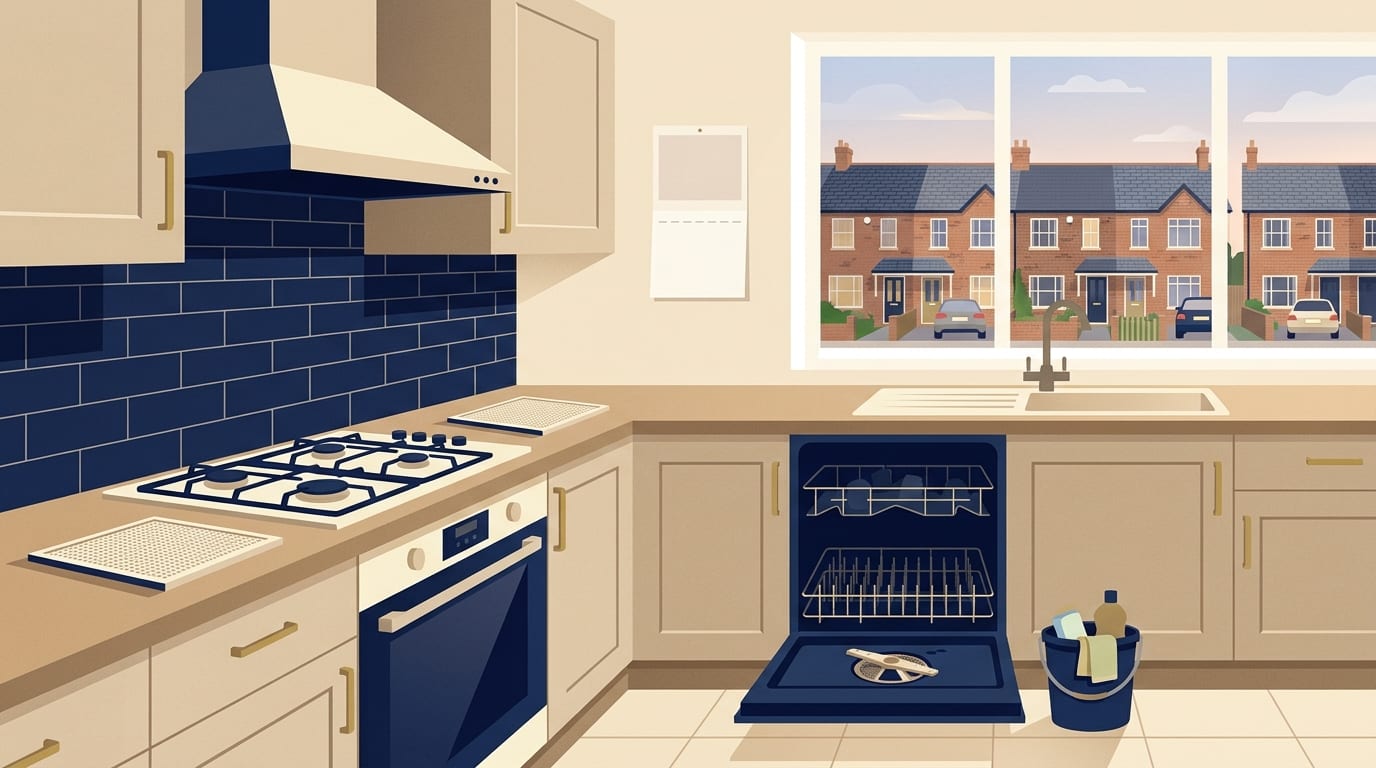
A deep clean is about the parts a weekly wipe skips, tackling all the hidden grease and built up grime. Knowing how to deep clean a kitchen properly saves you time and stops you moving dirt around the room. You can handle most of the forgotten spots yourself with basic supplies before bringing in a professional for the heaviest work.
Plan the order top to bottom
Start by planning your route through the room so you only clean each surface once. Dust and debris fall as you work, so cleaning out of sequence means you end up wiping the same counters twice. Follow this order to keep the dirt moving downwards.
- Clean the high points and ceilings first to knock down loose dust.
- Move down to the walls and windows next.
- Tackle the mid level surfaces and furniture, which covers your worktops, the hob, the sinks and other furniture.
- Drop down to the low level surfaces and your skirting boards.
- Leave the floors until the very end to sweep up the debris.
This order works because dust and debris fall as you work.
Extractor filters and the cooker hood
Your cooker hood traps airborne grease and needs regular attention to keep drawing air properly. Switch the hood off before you start and follow the manufacturer instructions, as Which? gives no safety steps for this job. If the hood is very dirty or mounted high up, this is a job for a professional rather than something to attempt yourself.
Aluminium mesh grease filters need washing to clear the blockages. Remove them and soak them in hot soapy water with baking soda for at least ten minutes. Scrub them with a non-abrasive brush to lift the grease. Alternatively, wash them in the sink using hot water and washing up liquid for light grease. Put them in the dishwasher for heavier grime. Rinse them and pat them dry fully before you refit them.
Paper filters cannot be cleaned and you must replace them when they are saturated. These paper filters last from about three months up to a year. Carbon odour filters sit inside hoods that recirculate air back into the room. You cannot clean these carbon filters either. Manufacturers generally advise replacing carbon filters every three months, though an annual replacement may be sufficient.
For a stainless steel hood exterior, mix a paste of one part bicarbonate of soda to one part white vinegar. Test this paste on a hidden area first. Scrub in a straight line along the grain rather than in circles. Avoid scouring sponges as they can scuff and damage the surface.
Hob and oven door
Clean your hob as soon as it is cool enough to touch. Waiting makes burnt food much harder to shift. For an electric ceramic or induction hob, loosen the stubborn grime with a hob scraper first. Follow this with a cream cleaner or a suitable degreaser to lift the remaining marks.
Gas hobs need a slightly different approach. Remove the pan supports and wash them in a sink of warm soapy water. Use a small brush to clear blockages and grease from around the gas burners.
Turn your oven off at the mains before you start working on it. For the glass door, use a glass scraper to remove the burnt on residue. Finish the glass with a soft sponge. Avoid scourers entirely as they can scratch the glass. Handle any removable glass carefully. A simple knock could cause a hairline fracture in the glass.
Metal oven shelves can be taken out and soaked in warm soapy water to loosen the baked on grease. If the inside needs heavy work, you might prefer to clean an oven yourself using a dedicated method.
Microwave and small appliances
Food splatters inside a microwave harden quickly and become difficult to wipe away dry. Place a bowl of water inside the microwave. Add a couple of spoonfuls of white vinegar or a little lemon juice to the water. Heat this bowl on high for a few minutes to create steam.
Leave the microwave door closed to let the bowl cool down. Open the door and wipe the top, bottom and walls with a damp sponge.
Take the glass plate out to clean it. You can clean the plate by hand in the sink or place it in the dishwasher. Wipe down your toaster, kettle and other small appliances with a damp microfibre cloth. Make sure all small appliances are unplugged before you wipe them, and dry them thoroughly before plugging them back in.
The fridge
You should deep clean a fridge two to four times a year. Wipe up any spills regularly in between these deep cleans. Plan this job for a time when the fridge holds the least food. Empty the contents completely and move all perishables into cool bags.
Wash the shelves and drawers in the sink using washing up liquid. Let glass shelves reach room temperature before they hit the hot water to avoid cracking them. Wash the interior walls with lukewarm soapy water. Avoid detergent sprays or strong chemicals inside a fridge because the smell can linger on your food.
Wipe everything from top to bottom. Pay attention to the rubber door seals and pull them back gently to clean out the crumbs. Unplug the fridge if you can and pull it forward safely. Dust or gently vacuum the condenser coils at the back.
Keep an open pot of bicarbonate of soda inside the fridge to absorb smells. Replace this pot about monthly.
Dishwasher filter and seals
Food waste catches in the bottom of your dishwasher and creates bad smells. Remove the filter at the base of the machine and wash it in the sink. The filter should be cleaned once or twice a month.
Wipe the rubber door seals with a damp cloth monthly. Do this weekly for frequent users. Maker advice on how often can vary, so check your manual.
Stainless steel, worktops and cupboard fronts
Wash stainless steel appliances with warm water and a little washing up liquid. Polish the surface with a dry microfibre cloth afterwards. Buff carefully with the grain of the metal to restore the shine. Avoid using scourers, steel wool, bleach and ammonia.
Clear your worktops completely so you can wipe right to the back edges. Wipe down the cupboard fronts, the handles and the splashbacks using warm soapy water. Never use boiling water with bleach for any cleaning task.
Never mix different products together to create a stronger solution. If you are unsure about what is safe to combine, check which cleaning products are dangerous to mix before you start.
Floors last
Floors take the most dirt and catch all the debris you brush off the higher surfaces. Leave the sweeping and mopping until every other job is finished. Move any freestanding items out of the room so you can reach the corners.
Sweep or vacuum the floor thoroughly to pick up the loose crumbs, dust and dried food. Mop the floor with warm water and a suitable floor cleaner. Work from the furthest corner backwards towards the door so you do not step on the wet surface.
Kitchen cleaning checklist and frequencies
This table shows the main kitchen deep clean tasks and how often they need doing.
|
Area |
What to do |
How often |
|---|---|---|
|
Paper extractor filters |
Replace when saturated |
Three months up to a year |
|
Carbon odour filters |
Replace with new filter |
Every three months, though annual may be enough |
|
Fridge interior |
Empty and wash with soapy water |
Two to four times a year |
|
Fridge odours |
Replace open pot of bicarbonate of soda |
About monthly |
|
Dishwasher filter |
Remove and wash in sink |
Once or twice a month |
|
Dishwasher seals |
Wipe with damp cloth |
Monthly, or weekly for frequent use |
These frequencies are general guides, so check your appliance manual.
When to book a professional deep clean
A thorough kitchen clean is hard physical work. You might prefer to book a professional if the grease is very heavy or if the extractor hood is out of reach. You can read more about what a deep clean includes to help you decide.
A professional cleaner will need to know a few details to scope the job accurately. Tell them the following points before they quote.
- The overall size of your kitchen.
- The condition of the appliances that need cleaning.
- Whether they need to bring their own products and equipment.
- Which specific tasks you want them to skip.
- Whether you need them to clean the inside of the cupboards.
Be clear about what you want them to skip. If you have already cleaned the oven and the fridge, tell them this upfront. This lets them adjust their time and focus on the remaining deep clean tasks. Before you book, ask about their public liability insurance and exactly what is included in their deep clean checklist.
Common questions
Do I need to empty my kitchen cupboards for a deep clean?
Emptying your cupboards lets you clean the inside shelves and remove stale food crumbs, and a deep clean is a good time to do it. Take everything out, wipe the interior with warm soapy water and dry it before putting the tins and packets back.
What removes hard grease from a cooker hood?
Soaking aluminium mesh filters in hot soapy water with baking soda for at least ten minutes softens hard grease. Scrub them with a non-abrasive brush afterwards. For the stainless steel exterior of the hood, a paste of equal parts bicarbonate of soda and white vinegar rubbed along the grain is the Which? method, tested on a hidden area first.
Can I use bleach on stainless steel kitchen sinks?
You should avoid bleach, ammonia and steel wool when cleaning stainless steel. Wash the sink with warm water and washing up liquid instead. Polish the clean metal with a dry microfibre cloth, buffing with the grain to restore the shine.
Will a deep clean remove burnt food from my hob?
A deep clean can help with burnt food if you use the correct tools for your hob type. Ceramic and induction hobs need a hob scraper followed by a cream cleaner or degreaser. Gas hobs require you to remove the pan supports and wash them separately in warm soapy water.
Why do I need to clean my dishwasher filter?
Food waste catches in the filter at the bottom of your dishwasher and creates bad smells if left sitting there. Remove the filter and wash it in the sink once or twice a month.
Next steps
Before you start scrubbing or before you call a professional, get your kitchen ready using this checklist.
- Clear away the daily clutter from your worktops so the surfaces are bare.
- Empty the kitchen bin and take the rubbish outside.
- Eat down the food in your fridge so it is easier to empty.
- Check you have enough cool bags to store your chilled food.
- Buy replacement paper or carbon filters for your extractor hood if needed.
- Gather your microfibre cloths, washing up liquid and bicarbonate of soda.
Getting the preparation right means you can focus entirely on the deep cleaning tasks without stopping to tidy up. When you are ready to hand the heavy work over to a professional, you can find a house cleaner near you to get like-for-like quotes.
Find a top rated house cleaner near you
2,880 house cleaners across the UK, each ranked on their Google rating and the number of reviews behind it. Start with your county: