Having a professional cleaner for the first time is a relief, but the arrangement only works well when you both know exactly what to expect. A successful first visit relies on agreeing a short written task list beforehand and clearing the way so they can get straight to work. By spending a little time preparing your home and confirming the details, you set the right standard for every clean that follows.
Why the first visit matters
The first time a cleaner visits your home is essentially a trial run for a longer working relationship. It is the moment when your expectations meet their reality. Without a clear brief, it is incredibly easy for misunderstandings to happen.
When a cleaner first arrives, they do not know the quirks of your property or where the dust gathers fastest. They need to learn the layout, understand your priorities and get a feel for how long each room takes.
Some homes need a bit of extra work to bring them up to a maintainable standard. Deep cleaning is recommended every few months or before starting a regular cleaning arrangement. This means your first visit might be a larger job than the weekly routine that follows.
Taking the time to prepare for this initial visit prevents the most common mistakes. Choosing a cleaner on the lowest hourly rate alone or handing over a key with no agreement on tasks usually leads to disappointment. A properly planned first visit gives you a baseline to judge their work against.
Agree the task list and time in writing
You must agree on the specific tasks, the hours required and the budget before the cleaner arrives. A verbal chat at the front door is never enough. You should write down a clear list of what you expect in each room so there is no confusion.
Be realistic about what can be achieved in the time you are paying for. A standard domestic clean generally includes these routine tasks:
- Wiping down kitchen worktops and cupboard doors
- Cleaning the bathroom sink, toilet, bath and shower
- Dusting accessible surfaces in living areas and bedrooms
- Vacuuming carpets and mopping hard floors
Never assume that extras like ovens, inside windows, upholstery or carpets are included, as these take significant extra time. If your budget only covers three hours, tell the cleaner which rooms matter most. If the spare bedroom is rarely used, tell them to skip it and focus on the kitchen and bathrooms instead.
Discuss whether this first visit is booked as a deep clean or a standard clean, and ask how the price differs. A deep clean goes much further, tackling inside appliances, limescale, grease behind the hob and skirting boards. If you want these done on day one, you must budget for the extra hours.
The table below shows standard regular cleaning rates to help you budget for ongoing visits.
|
Region |
Typical hourly rate |
|---|---|
|
Rest of the UK |
£13 to £25 |
|
London and the South East |
£20 to £28 |
These are typical 2026 ranges, not quotes. Remember that a deep clean is priced differently, either by property size or at a higher hourly rate. To understand exactly what is covered in a standard visit, you can read our guide on what a regular domestic cleaner will and will not do.
Products, equipment and who supplies them
One of the most important things to settle before the first visit is who provides the cleaning sprays, cloths and vacuum. Some cleaners bring their own products and vacuum while others expect you to supply them.
Where products are provided by the cleaner, expect a small premium. If a cleaner uses their own supplies, this may be factored into the hourly rate. If you supply products yourself, some independent cleaners may lower their rate.
If you prefer specific brands, you must confirm these arrangements in advance. Specialist or eco-friendly products cost more, so a cleaner will need to know if you require them. If you are supplying the materials, ensure you have the basics ready for the first visit:
- A multi-surface cleaner for kitchens and living areas
- A bathroom spray for limescale and soap scum
- A suitable floor cleaner for your specific hard floors
- Clean microfibre cloths and sponges
- An empty vacuum cleaner and a clean mop
Check that your vacuum cleaner is empty, the filters are reasonably clean and it is safe to use. A cleaner cannot do a good job if they are fighting with a blocked vacuum or a broken mop. Using the wrong product on a wooden floor or natural stone tile can cause damage, which is why agreeing on products beforehand is critical.
Do not ask a cleaner to mix cleaning chemicals, as this is dangerous. Heavy mould, biohazards and hoarded properties are not routine cleaning jobs. These situations require a specialist with different equipment and protective gear.
What to tidy before they arrive
You are paying for a cleaner to clean your home, not to tidy your personal belongings. Time spent picking up clothes is time lost on scrubbing the bathroom. Clear your floors, kitchen worktops and bathroom surfaces as much as possible before they knock on the door.
The table below explains what you should do before the cleaner arrives and why it makes a difference.
|
Before the visit |
What to do |
Why |
|---|---|---|
|
Clear floors |
Pick up clothes, toys, shoes and cables |
Allows the cleaner to vacuum and mop safely without wasting time. |
|
Clear surfaces |
Put away post, dishes, laptops and toiletries |
Gives clear access to wipe down worktops, tables and sinks. |
|
Secure valuables |
Put away cash, jewellery and fragile items |
Prevents accidental breakages and gives you peace of mind. |
|
Check supplies |
Leave out the vacuum, mop and cloths if agreed |
Ensures the cleaner has exactly what they need to start immediately. |
If you have sentimental items or delicate surfaces like untreated wood or natural stone, tell the cleaner beforehand. They need to know to take extra care or to avoid using harsh sprays on sensitive materials.
Access, pets and alarms
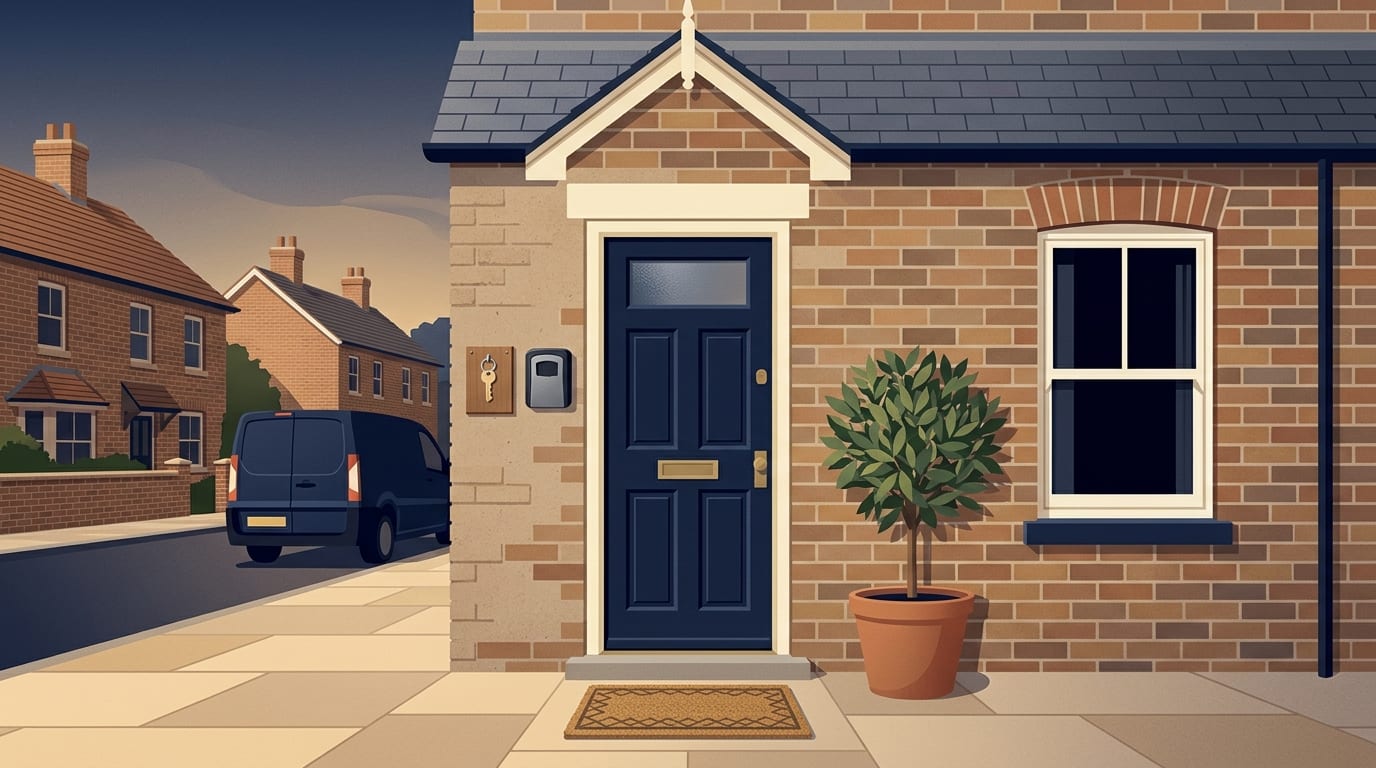
Decide exactly how the cleaner will get into your property. If they are arriving while you are at work, you will need to agree on key handling. Never hand over a set of keys without a clear agreement on how they are stored and who has access to them. A key safe is one option, and a qualified locksmith should fit any new lock or key safe.
If you have a burglar alarm, set up a temporary code for the cleaner to use and share it securely. You can easily change this code later if the arrangement does not work out. For more detailed advice, read our guide on giving your cleaner a key and how to keep your home secure.
Think carefully about your pets. Even the friendliest dogs and cats can get in the way of a noisy vacuum cleaner or try to slip out of an open front door.
Keep your pets in a separate room or a crate for the first visit. Let the cleaner get used to the home without worrying about tripping over an animal. You can introduce them properly once the cleaner is settled into the routine.
Should you be home for the first visit?
It is generally a good idea to be home for the first visit, or at least for the start of it. Being there allows you to show the cleaner around, point out the quirks of your home and explain your routine.
You can show them where the outside bins go, how to empty your specific vacuum and which plug sockets are best to use. It is also helpful to point out the stopcock and fuse box just in case there is a minor emergency while they are working.
Meeting face to face gives you a chance to build a working relationship and establish trust. Handing over the responsibility for your home is a big step, so feeling comfortable with the person is just as important as the cleaning itself.
Once you are comfortable with their standard of work and you have agreed on the regular tasks, you can confidently leave them to it for future visits.
Vetting, insurance and employment rules
Understanding who you are hiring and how they are vetted is crucial before they start. Agencies vet and manage their cleaners, and most background check them.
Independent cleaners are not vetted unless you found them through a personal recommendation. It is completely reasonable to ask an independent cleaner for references from other local clients. A basic DBS check is something an individual applies for themselves, costs £20 and covers England and Wales, so a cleaner can be asked to show one.
You should also ask for proof of public liability insurance. It is a sensible check to make before something gets broken. If a cleaner damages something, you will want to know whether they have insurance.
Be very careful not to become an employer by accident. GOV.UK says you are the employer if you hire someone to work in your home and they are not self-employed or paid through an agency.
An employer must pay at least the National Minimum Wage, check the right to work, run payroll and hold employers' liability insurance. The National Living Wage is £12.71 an hour from April 2026 for those aged 21 and over. For your own case, check GOV.UK or ask an accountant.
Giving feedback and what to do if it falls short
Sometimes a first clean does not quite match your expectations. If an area was missed or not cleaned well enough, raise your concerns quickly, specifically and politely after the first visit.
Do not wait until the next scheduled clean to mention it. Agree on what needs to change for the next visit so the cleaner has a chance to correct their routine. Taking photos of missed areas can be helpful if you are dealing with an agency manager rather than the cleaner directly. A good professional will appreciate clear feedback so they can get it right.
Under the Consumer Rights Act 2015, a service must be done with reasonable care and skill. If the work was not done with reasonable care and skill, you can ask for it to be put right.
Citizens Advice states that if services were not provided with reasonable care and skill, you can ask the trader to do it again if possible or ask for a discount.
If you need to make a formal complaint, Citizens Advice suggests this wording: 'In my opinion, you did not use reasonable care and skill when you provided this service.'
If you booked online or by phone, you normally have a 14-day cooling-off period. However, if you ask for the clean to happen inside this period, you must pay for what was actually done.
Setting up the regular routine
Once the first visit is complete and you are happy with the standard, you can lock in the regular schedule. Confirm the day and time they will arrive each week or fortnight and stick to it.
Make sure you understand their cancellation terms before you commit. Cancelling with less than 24 to 48 hours' notice may result in a charge, and no amount is given.
Consider what happens when your cleaner takes time off for holidays or illness. If your regular cleaner is unavailable, an agency will organise a replacement. With an independent cleaner, you must find a replacement or clean yourself.
Agree on how you will pay, whether that is a bank transfer after each visit or a monthly invoice. Never pay in full up front to an unknown trader. You can weigh up the different types of providers in our guide on how to choose house cleaning services.
Common questions
How long will the first visit take?
The time needed depends entirely on the size of your property and its current condition. The first clean may take longer than later visits while the cleaner gets to grips with the layout. You should agree a block of hours in advance rather than expecting the whole house to be finished in a short slot.
Do I need to clean before the cleaner arrives?
You do not need to clean the dirt, but you must clear the clutter. A cleaner cannot wipe down a kitchen counter covered in paperwork or mop a hallway covered in shoes. Tidying away your belongings means you get the full value of the hours you are paying for.
Can I ask the cleaner to do extra tasks?
You can ask for extras like cleaning inside the fridge or tackling the skirting boards, but you must agree this before the visit. These tasks take extra time and will cost more. Never assume a standard hourly clean includes deep cleaning jobs.
What happens if I am not happy with the first clean?
Talk to the cleaner politely and point out the specific areas that were missed. If you booked through an agency or a cleaning company, contact their management team with your feedback. You can ask them to return and fix the problem, but it is best to do this immediately.
Your next steps
Before your cleaner arrives for the very first time, make sure you have covered the essentials. Taking a few minutes to prepare prevents misunderstandings and sets a clear standard.
- Write down a room by room task list and share it with your cleaner.
- Confirm the hourly rate, the total hours and whether the first visit is a deep clean.
- Agree on who is providing the cleaning sprays, cloths and vacuum.
- Ask to see proof of their public liability insurance and a basic DBS check.
- Clear your floors and surfaces so they can start cleaning immediately.
- Decide how they will access the property and secure your pets.
Taking these practical steps helps the first visit run smoothly and builds a solid foundation for your ongoing cleaning routine. If you are still looking for the right person for the job, you can find a house cleaner near you to get started.
Find a top rated house cleaner near you
2,874 house cleaners across the UK, each ranked on their Google rating and the number of reviews behind it. Start with your county: