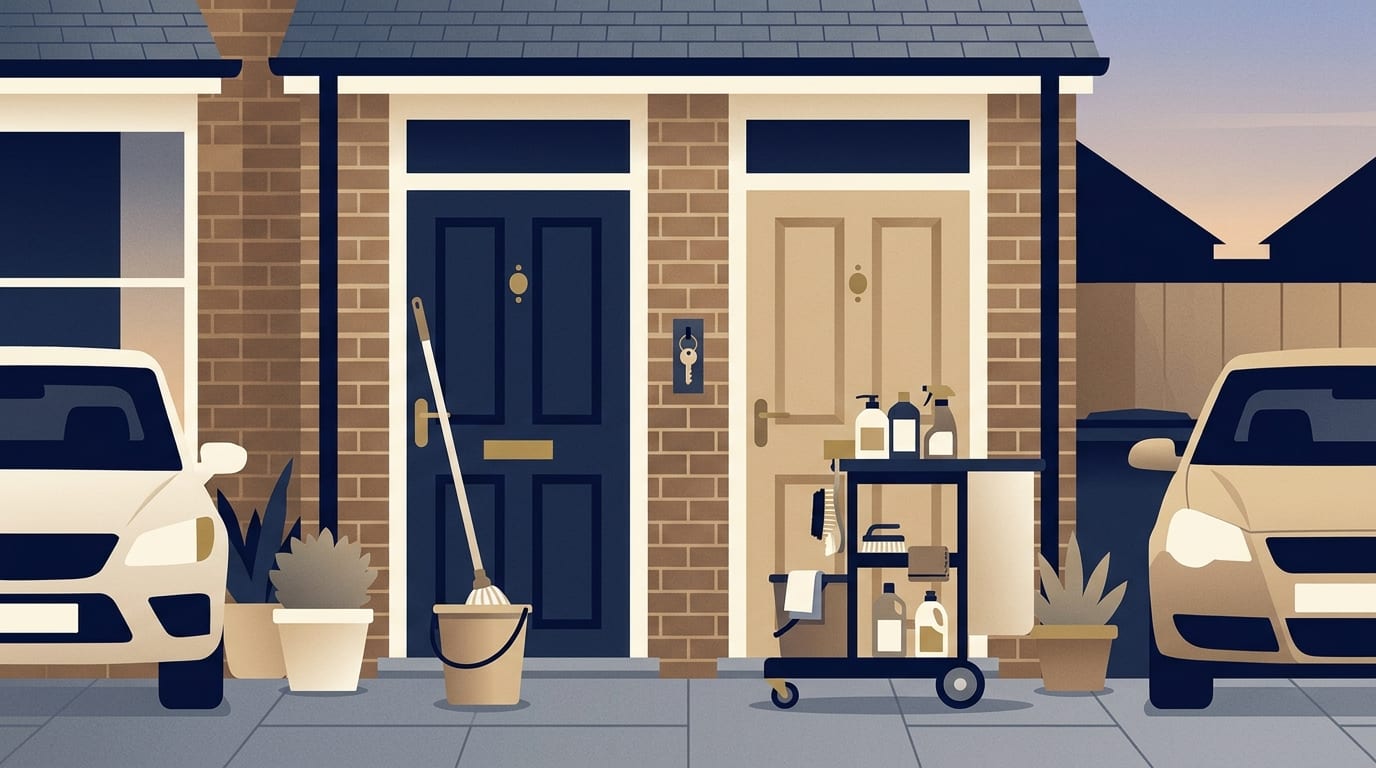
Handing over a key to a new cleaner is a sensible worry for most households letting a stranger into their home. Research reported by Which? found that 20% of homeowners keep a spare key under a doormat or flowerpot, but there are much safer and more reliable ways to let a cleaner in while you are out. Most people start by being at home for the first visits before moving to a few simple agreements about key handling and security. Establishing clear rules early on protects your property and ensures your cleaner knows exactly what is expected of them.
Do you have to give your cleaner a key?
No, you never have to hand over a key to your home if you are not comfortable doing so. Many people arrange their cleaning schedule around their own working hours so they can let the cleaner in and lock up afterwards. If you work from home or have a busy household with people coming and going, your cleaner can easily work around you while you are in the house.
Giving your cleaner a key is simply a convenience that allows the work to happen while the property is completely empty. Some cleaners prefer working in an empty house because they can move rapidly from room to room without disturbing anyone. It means you return to a clean house at the end of a long day without having to manage access on the morning of the clean. You just need to weigh up the convenience of an empty house against your own peace of mind regarding security.
Alternatives to handing over a key
If you prefer not to hand over a physical key permanently, you have several reliable alternatives. These options keep you in complete control of who enters your home and exactly when they do it. You just need to agree the access method before the first clean so your cleaner knows how to get in and get started.
- Being at home to open the door yourself for every scheduled visit.
- Asking a trusted neighbour to hold a spare key and let the cleaner in on the day.
- Having a family member who lives nearby drop round to open up and lock up.
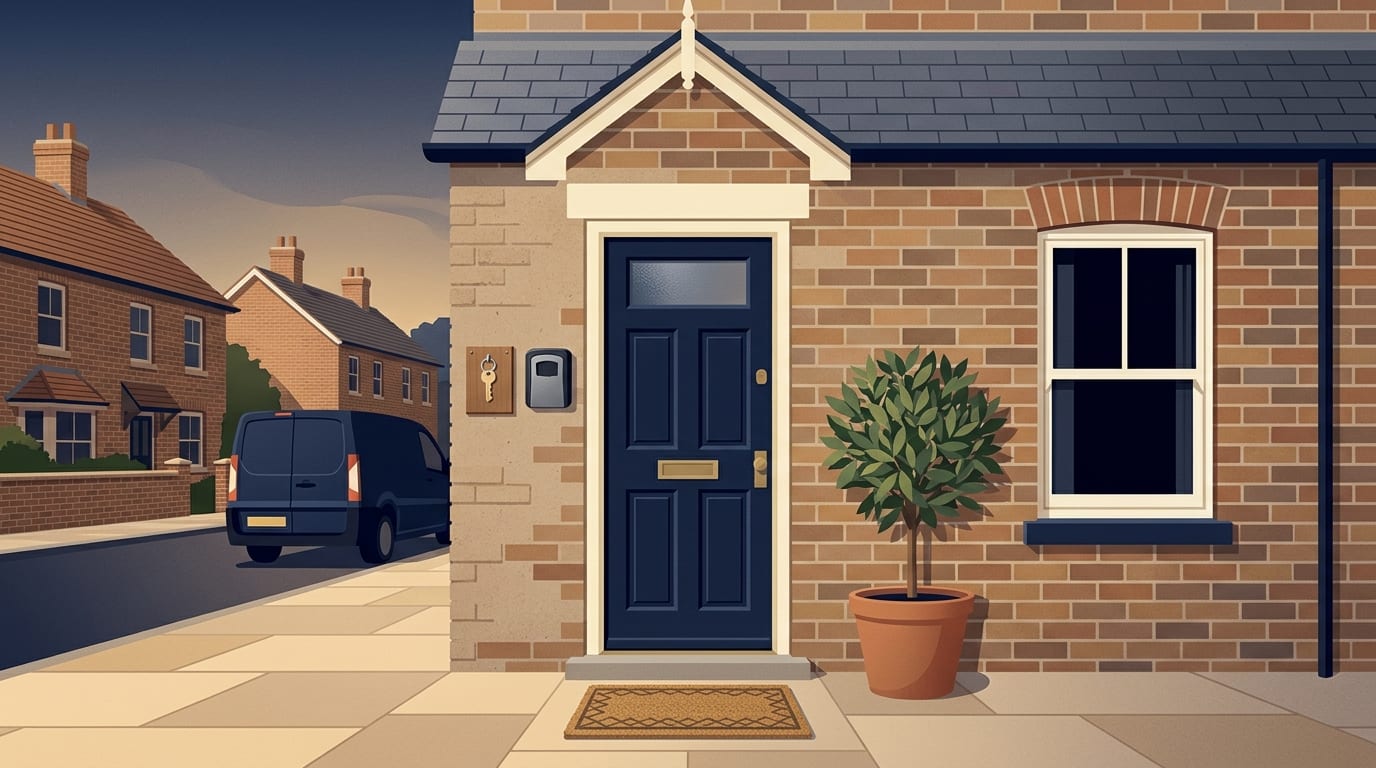
- Installing a key safe outside your property for the cleaner to use.
- Using a smart lock that allows you to grant temporary digital access from your phone.
If you decide to fit a new lock, a key safe or a new alarm system, always use a qualified locksmith to ensure the hardware meets standard security requirements. A key safe is highly practical because the physical key never actually leaves your property boundary. You simply give the cleaner the code, they let themselves in, and they return the key to the safe as soon as they lock the door behind them.
Who you are handing it to
Understanding who you are giving a key to depends entirely on how you hired your cleaning service. Agencies vet and manage their cleaners, and most carry out background checks. If you use an agency or company, ask how its cleaners handle and store customer keys.
An independent cleaner is generally not vetted unless you found them through a personal recommendation from a friend or neighbour. You are dealing with them directly, so you need to do your own checks before handing over unrestricted access to your home. You can ask an independent cleaner to show you a basic DBS check, which covers England and Wales, and is something an individual applies for themselves. You should also ask to see their proof of public liability insurance as a sensible check before they start work.
If you hire a cleaner directly and they are not self-employed, you might accidentally become an employer. GOV.UK states you are usually the employer of anyone who works in your home if you hire them and they are not self-employed or paid through an agency. An employer must check the person has the right to work in the UK, pay at least the National Minimum Wage, run payroll and hold employers' liability insurance.
You can read the full rules on employing someone to work in your home to ensure you stay on the right side of the law. This table shows the typical costs associated with hiring and vetting a cleaner before you hand over a key.
|
Item or service |
Typical cost or rate |
|---|---|
|
Basic DBS check (England and Wales) |
£20 |
|
National Living Wage (aged 21 and over) |
£12.71 an hour |
|
Regular cleaning (outside London) |
£13 to £25 per hour |
|
Regular cleaning (London and South East) |
Higher than outside London |
The cleaning rates are typical ranges for 2026, and local quotes will differ. Understanding these baseline costs helps you budget correctly when arranging your home cleaning.
Agree how the key is stored
If you do hand over a key, you must agree exactly how it will be looked after and stored. Do not just hand it over at the end of a visit and assume the cleaner knows your expectations. You need a clear understanding of where the key lives between cleans and what happens while the cleaner is travelling on public transport or between jobs. Ask how the cleaner will carry the key and whether it is ever left anywhere between visits.
A strict rule to agree is that your key is never labelled with your name, your address, or your postcode. If the key is dropped or lost in the street, a finder should have absolutely no way of knowing which front door it opens. Cleaners will often use a colour-coded tag or a secure reference number system instead to tell their keys apart. You must also agree that the key will never be copied at a local hardware shop without your direct written permission.
Put these points in writing. Having these points written down in a text message or email prevents misunderstandings later and gives you a clear record of the agreement. You should also agree who takes possession of the key if your regular cleaner goes on holiday and someone else covers the shift.
Keep a record of who holds keys
Losing track of who has access to your property is a common mistake for busy households with multiple service providers. You might give a key to a cleaner, another to a dog walker, and a third to a family member, only to forget exactly how many are in circulation. Keeping a simple written record in a notebook or on your phone helps you maintain security over the long term. Write down exactly who has a key, the specific date you handed it over, and the date it was eventually returned.
If you use an agency, you should know exactly how they manage key handovers if your regular cleaner is off sick or on holiday. If your regular cleaner is unavailable, an agency will organise a replacement so the clean still goes ahead. You need to know if the agency securely transfers your key to the replacement cleaner or if they require you to provide access on the day.
With an independent cleaner, you must find a replacement or clean yourself, meaning the key typically stays with them until they return from their leave. You can read more about how to choose house cleaning services to help you decide which setup suits your security preferences best. Keeping tight control over key movements ensures your property remains secure year after year.
What to check with your home insurer
Handing out a key may change how your home insurance policy responds if you need to make a theft claim. Policies differ widely between providers, so you must sit down and read the theft section of your specific documents. An archived 2015 article, which warns it could be out of date, notes that most home insurance policies demand obvious signs of forced entry before a claim can be lodged. The same article warns that insurers can require alarms to be switched on and doors to be fully locked when you leave the house.
If a burglar is given a key to your home, the break-in may not be covered by your home insurance policy. Which? reported this in November 2020, quoting Admiral insurance. The simplest way to protect yourself is to make sure spare keys do not get into the wrong hands in the first place. Do not assume your policy covers a theft just because you trusted the person who lost the key or left the door unlocked.
You should ask your insurer in writing whether a key held by a cleaner changes anything about your specific cover. Keep their written reply safe in your email inbox so you have solid proof of their stance if a problem occurs. It is also sensible to ask the cleaner for proof of their own insurance before they start working in your home. You can learn more about what insurance a domestic cleaner should have to protect your property against accidental breakages while you are out.
If a key goes missing or the cleaner leaves
Keys go missing occasionally, whether they are dropped in the street, left on a bus, or simply misplaced during a busy day. If your cleaner loses your key, you must act quickly to secure your home against unauthorized entry. Do not wait a few days to see if it turns up at the bottom of a bag. Call a qualified locksmith promptly to change the affected locks and issue a completely new set of keys.
You should tell your home insurer promptly if a key is lost and ask whether it affects your theft cover. If the cleaner holds their own public liability insurance, you can ask if their policy covers the cost of replacement locks and keys. Ask to see the policy wording to confirm what is covered.
When you finally part ways with a cleaner, you must ensure your key is returned on their final working day. Do not leave it until the following week, as people can easily forget, lose the key, or move away from the area. If a cleaner leaves abruptly and fails to return the key despite your requests, the safest course of action is to change your locks. This gives you complete peace of mind that no unaccounted keys are floating around the neighbourhood.
Building trust in the first few visits
Trust is not built instantly, and you should never feel pressured to hand over a key on day one. Most households prefer to schedule the first few cleaning visits for a time when they are at home and available. This allows you to meet the cleaner face to face, show them around the property, and explain exactly how you want things done. It also gives you a chance to see their standard of work and their general attitude before you grant them unsupervised access.
You can use this initial period to agree a written task list so expectations match perfectly on both sides. A written list ensures the cleaner knows which rooms to tackle, what products to use, and which areas are strictly off limits. You can also discuss practical details like how to operate your washing machine or where the main fuse box is located. Taking these early steps helps establish a highly professional relationship based on clear communication rather than blind trust.
Once you feel entirely comfortable with their reliability and standard of work, you can discuss handing over a key. By this point, you will have seen that they turn up on time, respect your belongings, and lock the door properly when they leave. You can then put the necessary key storage agreements in place and transition smoothly to having the house cleaned while you are out.
Common questions
Should I give my cleaner the alarm code?
If you want your cleaner to work while you are out and you keep your burglar alarm set, you will need to give them a code. You can often program a separate user code specifically for the cleaner, which allows you to track exactly when they enter and leave the property. Check your policy and tell your insurer you are doing this, as insurers can require alarms to be switched on when you leave.
What happens if the cleaner forgets to lock the door?
If a cleaner leaves your property unsecured and a theft occurs without any forced entry, your home insurance might not pay out. This is why choosing a reliable, vetted cleaner or a managed agency is vital for your ongoing home security. You should make locking the door and physically testing the handle a strict part of their written task list.
Can I ask for my key back at any time?
Yes, it is your property and you have the absolute right to request your key back whenever you choose. If you are taking a long holiday, pausing your regular cleans, or having building work done, it is perfectly normal to ask for the key to be returned. A professional cleaner will understand this requirement and hand it back without taking offence or asking questions.
Do cleaners charge extra to hold a key?
Charging practice varies, so ask before you book whether any separate fee applies for holding a key, or for an agency collecting and dropping off a key from another location.
Is a key safe better than handing over a key?
A key safe is often preferred by homeowners because it means the physical key never travels away from your property boundary. You can change the combination code whenever you change cleaners, giving you instant control over who gets into the house. It also completely removes the risk of the cleaner losing the key on public transport or while travelling between different jobs.
Your next steps
Before you hand over access to your home, follow these practical steps to keep your property entirely secure. Taking a little time to set things up correctly prevents stress, protects your insurance cover, and avoids misunderstandings later.
- Decide whether you want to use a key safe, a trusted neighbour, or hand over a physical key.
- Ask an independent cleaner to show you a basic DBS check and proof of public liability insurance.
- Check exactly how an agency manages keys and provides holiday cover if the regular cleaner is away.
- Read the theft section of your home insurance policy and ask your insurer if a key held by a cleaner changes your cover.
- Agree a written storage plan ensuring the key is never labelled with your address or copied without permission.
- Start with a trial clean while you are at home to build trust and agree a written checklist.
Getting the right access arrangements in place means you can enjoy the benefits of a professionally cleaned house without worrying about your security. If you are ready to start looking for a reliable service that fits your busy schedule, you can find a house cleaner near you to discuss your exact requirements.
Find a top rated house cleaner near you
2,874 house cleaners across the UK, each ranked on their Google rating and the number of reviews behind it. Start with your county: