Being unhappy with your cleaner is very common, and because it happens in your own home it often feels hard to bring up. Most problems come down to unclear expectations rather than poor skills, so a specific and friendly conversation usually fixes things. Under the Consumer Rights Act 2015 a service must be provided with reasonable care and skill, and you can ask for it to be put right if it is not.
Working out exactly what went wrong
Before you speak to your cleaner or the cleaning company, take a few minutes to pin down exactly what you are unhappy with. Dissatisfaction usually falls into these common areas:
- Surfaces left dusty or floors not mopped properly.
- Arriving late or leaving early but charging for the full time.
- Moving items and not putting them back in the right place.
- Using too much of your cleaning products.
- Breaking or damaging items while cleaning.
When you spot a problem with the standard of the clean, take dated photographs of the missed areas as soon as you notice them. This gives you clear evidence to share, which is much easier than trying to describe a dusty skirting board over the phone. Make a quick list of what was missed or done poorly.
Keep in mind that regular domestic cleaning covers the routine wiping, dusting and vacuuming of kitchens, bathrooms and living areas. It does not normally include deep cleaning tasks like scrubbing inside ovens, moving heavy furniture or washing inside windows unless you agree this in advance. Check what you actually agreed to before deciding the cleaner has done a bad job.
How to raise the problem with your cleaner
Raise the issue quickly and politely, ideally in writing. Sending a text or an email gives you a record of what was said and allows the cleaner time to read it without feeling backed into a corner. Keep your message short, friendly and focused on what happened.
Start by saying you appreciate their work overall, but you have noticed a few specific things that need attention. Attach the photos you took and say plainly what you want changed next time. Most cleaners want you to be happy with their work and will simply apologise and correct the mistake.
Do not tell your cleaner that everything is fine if you are actually unhappy. This is a very common mistake people make to avoid awkwardness. Citizens Advice notes that if you told the trader the service was good enough when it was done, you do not have the legal right to a redo or a discount later.
If you use an agency or a cleaning company, they will usually have a customer support team available seven days a week. You can send your photos and feedback to the office rather than dealing with the cleaner directly. The company can deal with the staff member for you, which takes some of the pressure off. With an independent cleaner there is usually no formal complaints process, so keeping things polite and clear is the best way to protect your working relationship.
Writing a clear task list for future visits
The easiest way to stop problems happening again is to put a written task list in place. When expectations are not written down, you and your cleaner will almost certainly have different ideas about what a clean home looks like.
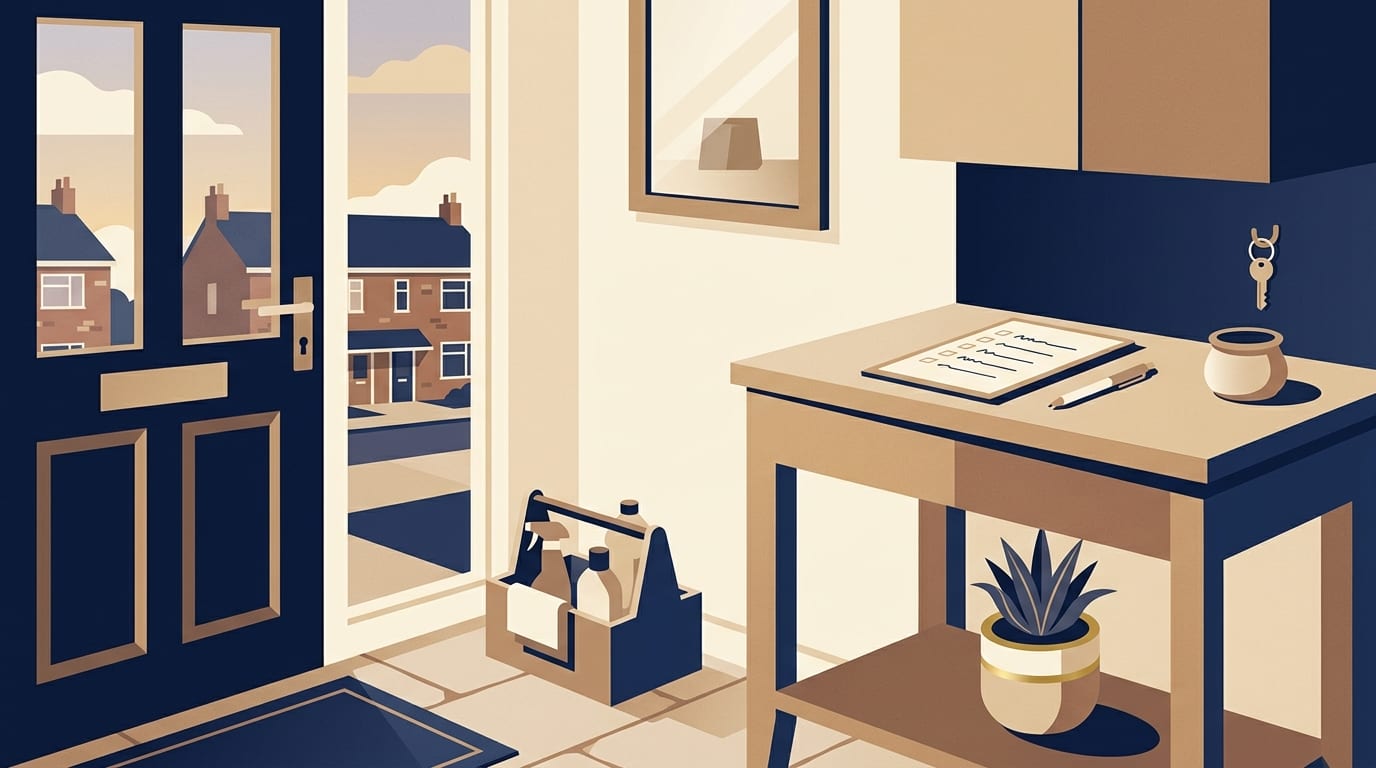
A good checklist splits the home room by room and says exactly what needs doing. Leave a printed copy on the kitchen counter on cleaning day. You can ask your cleaner to tick tasks off as they go, or simply use it as a shared reference.
Include these details on your written list:
- Which rooms to clean and which to leave alone.
- Specific tasks for each room, like mopping the kitchen floor or wiping the bathroom mirrors.
- Things the cleaner should never touch, such as fragile ornaments or a work desk.
- Where to find the cleaning products and equipment.
- Instructions for locking up and storing the key if you are out.
Be realistic about what can fit into the time you pay for. If you book a cleaner for two hours a week and your list takes four hours to complete, the standard will always fall short. Ask your cleaner to look at the list and tell you honestly if they need more time.
Asking for the clean to be put right
Under the Consumer Rights Act 2015, any service you pay for must be provided with reasonable care and skill. If your cleaner does a poor job, the law gives you the right to ask them to fix it.
The law says you must first give the trader the option of redoing the service, if it is possible. You should contact the cleaner or the company as soon as you notice the problem. Ask them to come back and finish the tasks they missed or clean the areas they did poorly.
If you use a cleaning company, they might send a different staff member to do the redo. If you use an independent cleaner, they will need to come back themselves.
If a problem is not obvious straight away, you still have rights. You can ask for a service to be put right for up to six years in England and five years in Scotland. Rules differ in Scotland, Wales and Northern Ireland, so always check the specific rules for where you live.
When to ask for a discount instead
Sometimes asking a cleaner to come back is not the best solution. You can go straight to a discount if redoing the service is not possible, would take too long, or would be very inconvenient for you.
For example, if you hired a cleaner for a one off clean before hosting a party, and they did a poor job, coming back the day after the party is useless. In this case, a discount may be the better option.
You must agree the discount amount with the trader. The law does not set a specific percentage. You need to suggest a figure, explain why it is reasonable, and negotiate from there.
If you have already paid in full, you are asking for a partial refund. If you have not paid yet, you are negotiating a lower final bill. Keep your negotiation polite, show your photos, and explain how you calculated the discount you are asking for.
What to do if the problem is not solved
If your cleaner refuses to redo the work and refuses a discount, you have further options. What you do next depends on how you pay for the service and whether you use a company or an independent cleaner.
If the problem is not solved, you can look into alternative dispute resolution. This is a way of settling disagreements without going to court. You can contact the Citizens Advice consumer service by phone or online chat for guidance on how to start this.
If you paid by card, you might be able to get your money back through your bank. Citizens Advice explains that Section 75 applies to credit card purchases of more than £100 and no more than £30,000. These limits apply to a single item.
If you paid with a debit card, you can ask your bank to use the chargeback scheme instead. Section 75 usually does not cover purchases made through third parties like PayPal or eBay.
Ending the cleaning arrangement kindly
When a cleaner repeatedly falls short of your standards, or you just cannot agree on how things should be done, it is time to end the arrangement. Doing this kindly and clearly saves stress for everyone.
Keep your cancellation message short and non accusatory. You do not need to list every mistake they made. A short, honest message saying you have decided to end the arrangement is enough. Thank them for their time and wish them well.
Always check your terms for notice periods. Cancelling with less than 24 to 48 hours notice may result in a charge. Give clear notice so they know exactly which visit will be their last.
If they hold a key to your home, agree exactly how they will return it. Make sure you pay for all the work they have done up to that point. If you are unsure about paying your cleaner when you cancel, check your original agreement or the terms on the company website.
Rules if you employ your cleaner directly
How you end things might be different if you are legally an employer. Sometimes the setup turns you into an employer without you realising.
GOV.UK says you are usually the employer of a housekeeper or anyone else who works in your home if you hire them and they are not self-employed or paid through an agency. You cannot ask an employee to become self-employed to avoid the rules.
When you are an employer, you have strict legal duties. Employers must pay at least the National Minimum Wage, which includes the National Living Wage of £12.71 an hour from April 2026 for those aged 21 and over. You must also check their right to work, run payroll, and hold employers' liability insurance.
If you pay a cleaner directly, read the GOV.UK guidance carefully. You can also read more about whether your cleaner is self-employed to understand your position.
Finding a replacement cleaning service
Once you have ended the arrangement, you need to decide how to replace them. Think about whether you want another independent cleaner, or if a cleaning company or agency would suit you better.
If you use an agency, they take a fee to introduce a cleaner and manage the booking. If the regular cleaner is unavailable, the agency organises a replacement so the clean goes ahead. With an independent cleaner, you need to find a replacement yourself or clean the home yourself if they are off sick.
Short notice requests often attract a premium, especially through agencies. Take your time to find the right fit rather than rushing to book someone for the next day. When you speak to new cleaners, be clear about why your last arrangement failed and show them your written task list before they quote.
Comparing typical house cleaning prices
When you look for a new cleaner, it helps to know what a fair price looks like. Choosing on the lowest hourly rate alone is a common mistake. This table shows typical cleaning costs based on the type of service.
|
Cleaning service |
Typical cost |
|---|---|
|
Regular cleaning (outside London) |
£13 to £25 per hour |
|
Regular cleaning (London and South East) |
£20 to £32 per hour |
|
Deep cleaning |
£25 to £45 per hour |
|
End of tenancy clean (studio outside London) |
£120 to £170 |
These are typical 2026 ranges, not quotes. End of tenancy cleans in London are roughly 25 to 40 per cent higher.
Common questions
Can I ask my cleaner to pay for breakages?
If your cleaner breaks something, you can ask them to pay for a replacement or a repair. Ask whether the cleaner or company has public liability insurance, which is a sensible check but not a legal requirement. Discuss the damage calmly and ask for their insurance details if the item is valuable.
Do I still pay my cleaner if I send them home early?
If you send your cleaner home early because you are unhappy with their work, you should still pay for work already done. Raise the problem in writing and ask for a redo or a discount instead of withholding payment.
How do I prove the cleaner missed things?
A good way to show a cleaner missed tasks is to take dated photos immediately after they finish. A written task list agreed before the clean also helps, as you can clearly point out which agreed tasks were skipped. Without photos or a list, it becomes a difficult argument over one person's word against another.
Can I ask to see a cleaner's DBS check?
You can ask an independent cleaner to show you their basic DBS check before you hire them. A basic DBS check is something an individual applies for themselves, costs £20 and covers England and Wales. It is a sensible way to check their background if you are giving them a key to your home.
Your next steps checklist
Resolving a problem with your cleaner is much easier when you follow a clear process. Use this checklist to get things sorted.
- Take dated photographs of the poor cleaning as soon as you notice it.
- Write a polite message to the cleaner or company stating exactly what went wrong.
- Ask them to come back and redo the missed work at no extra cost.
- Suggest a fair discount if redoing the work is impossible or highly inconvenient.
- Create a written room by room task list for all future visits.
- Check your cancellation terms and give clear notice if you decide to end the arrangement.
If you have decided to move on and want a better fit for your home, take time to agree your standards clearly before the first visit. You can find a house cleaner near you to start getting like-for-like quotes and comparing what they offer.
Find a top rated house cleaner near you
2,880 house cleaners across the UK, each ranked on their Google rating and the number of reviews behind it. Start with your county: