A carpet cleaning steam clean can lift everyday dirt and leave a room smelling fresh. Many households use these machines for routine maintenance to keep their floors looking tidy. Steam cleaners heat water to create steam that loosens dirt and sanitises surfaces. This makes them a useful tool for light cleaning across different rooms in your home.
However, you must understand the limits of this equipment before you start. Steam machines are not designed to remove heavy grime from heavily soiled floors. The main risk when you tackle this job yourself is poor moisture control. Using too much steam can leave carpets overly damp.
Using too much steam can even damage delicate fibres. If you hold the machine in one place and use it for too long, you risk shrinking or damaging the carpet fibres. You must keep the machine moving and monitor how wet the floor gets.
Steam cleaner or carpet cleaning machine
People often confuse steam cleaners with standard carpet cleaning machines, but they work in very different ways. Carpet cleaners spray water and detergent directly into the fibres. Once the liquid is in the pile, the machine goes to work mechanically. They scrub the floor with built in brushes to agitate the dirt. Finally, they suck the dirty water back up into a recovery tank.
A steam cleaner relies on temperature rather than physical scrubbing. A steam cleaner heats water to create steam that loosens dirt, rather than spraying detergent and scrubbing. Both types of machine carry a risk of water damage if used incorrectly.
When you use a standard carpet cleaner, the extraction stage is vital. Some machines struggle to suck up dirty water. When the vacuum is weak, it leaves carpets soggy. Whether you choose a steam model or a liquid washing machine, you must check that it is OK to get the carpet wet before you begin.
Prepare the room and vacuum first
You cannot simply plug a machine in and start washing the floor. You must begin by clearing a big space in the room. Move your furniture out of the way so you have a clear run across the floor. Once the space is clear, you must vacuum the entire area. Vacuuming removes loose dust and hair that would otherwise turn into mud when the floor gets wet.
After vacuuming, you need to inspect the floor for marks. You must treat any stains first before you turn the washing machine on. When a spill happens, you should act quickly to prevent it setting into the fibres. You must dab the stain carefully from the outside in, which stops the mark spreading further across the floor.
You must be careful about the temperature of the water you use on marks. Avoid using a lot of water on a stain. You must also avoid using hot water, as heat can make some stains worse. Heat or steam can make some stains worse.
Patch test before you start
Not all floors can handle moisture or heat safely. You must check the care label on your floor covering first. The label will tell you if it is OK to get the carpet wet. Even if the label permits washing, you must still test the equipment before you wash the whole room.
You must test the product on an inconspicuous area first. Choose a small patch of floor that is usually hidden by a sofa or a heavy unit. Run the cleaner over a small area just as you would for the rest of the room. Do not apply more water or heat than you plan to use on the main floor.
Once you have washed the small patch, you must allow it to dry completely. You need to wait to see if the carpet might be damaged by the water or the heat. Look closely at the test patch once it is dry. Check if the heat has caused any shrinking or if the delicate fibres look damaged. If the test patch looks wrong, do not proceed with the main floor.
Work slowly and do not soak the carpet
Operating the machine requires care and attention to the manufacturer instructions. You must set the machine up correctly to avoid flooding the floor. Follow these steps to wash your floor safely.
- Fill the clean water tank with warm water and the recommended solution.
- Avoid overfilling the tank past the maximum fill line.
- Stick to the brand formula to prevent excess foam building up inside the machine.
- Follow the machine's manual for how to move it across the carpet.
- Overlap each pass slightly so you do not miss strips of dirt.
- Keep the machine moving at a steady pace and do not soak the carpet.
- Empty and rinse the dirty water tank as soon as you finish the room.
You must control the amount of liquid and heat you put down. If you use the machine for too long in one spot, you risk shrinking or damaging the fibres. Using too much steam can leave carpets overly damp or damage delicate fibres.
Drying the carpet properly
The washing stage is only half the job. You must manage the drying process carefully to protect your home. Once the washing is complete, you must let the carpet dry fully before walking on it. Walking on a damp floor will push new dirt straight back into the wet fibres.
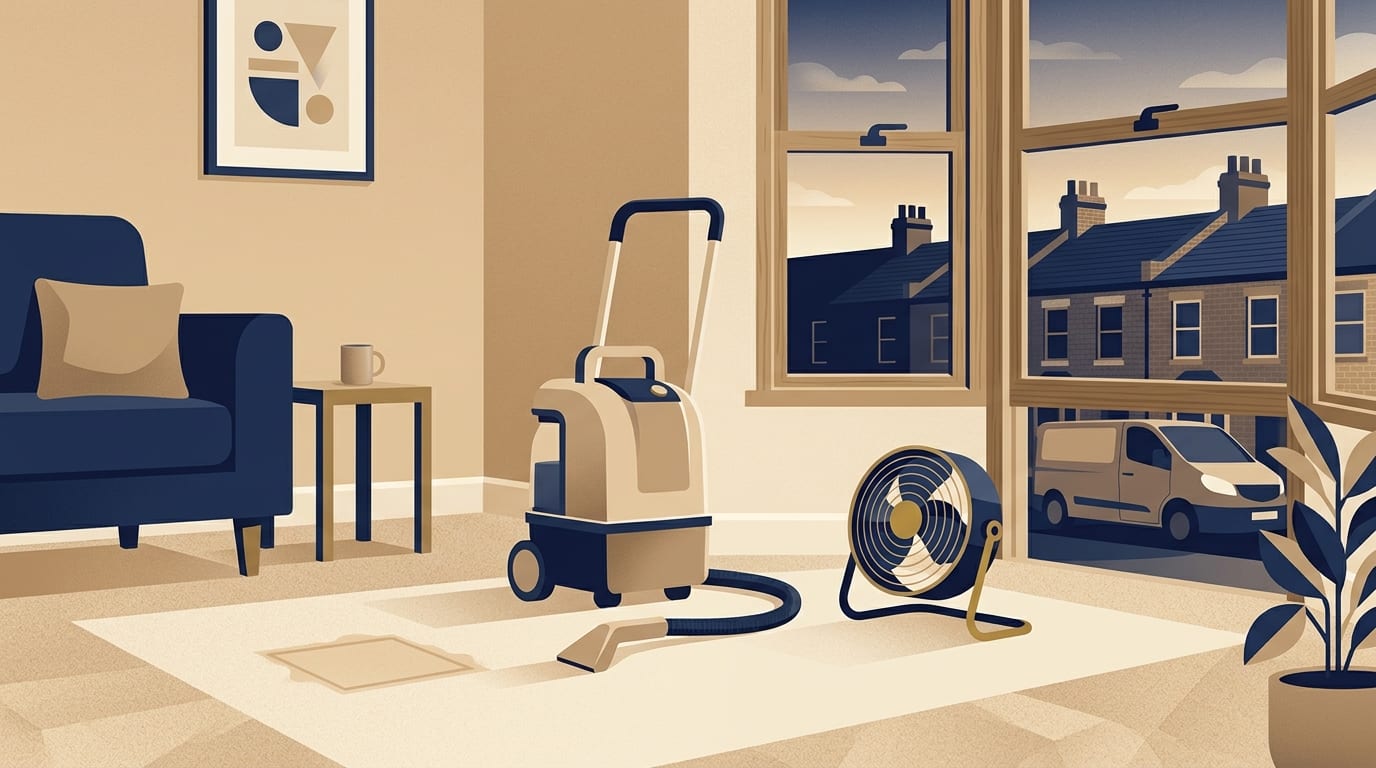
You can change the environment in the room to help the floor dry faster. Opening windows creates a draft that can help speed up drying. Using a fan in the room can also help speed up drying if the weather outside is poor. You must remember that some machines struggle to suck up dirty water, leaving carpets soggy for hours.
You might be tempted to use artificial heat to finish the job quickly, but you must not do this. Do not use a space heater near the wet floor. Do not use a hairdryer on damp patches. Applying direct heat from a space heater or hairdryer could burn the carpet. You must be patient and keep children and pets off the wet floor until it is completely dry.
Common mistakes to avoid
The National Carpet Cleaners Association highlights several common errors people make when tackling this job at home. These mistakes can leave carpets damaged or overly damp. The association also recommends that children and pets stay off the cleaned item until it is completely dry.
The table below shows these common mistakes and the factual risks associated with them.
|
Common mistake |
Why it happens or what it causes |
|---|---|
|
Failing to remove all soiling |
Home machines and steam are not designed to remove heavy grime. |
|
Failing to rinse properly |
Some machines struggle to suck up dirty water, leaving carpets soggy. |
|
Vigorous scrubbing |
Listed by the National Carpet Cleaners Association as a common DIY mistake. |
|
Heat damage |
Using a machine for too long risks shrinking or damaging the fibres. |
|
Over wetting |
Using too much steam or water can leave carpets overly damp. |
|
Use of incorrect chemicals |
Failing to stick to the brand formula creates excess foam. |
Renting or buying a machine
Renting a machine can suit an occasional clean better than buying a large appliance to store in a cupboard, though the same safety steps apply to a rented machine. Twenty four hour rentals of a carpet cleaning machine from the UK's biggest rental brand start from £28. If you need the machine for a whole weekend, forty eight hour rentals from the same brand start from £33.
When you bring a rental machine home, you must treat it with respect. Electrical appliance use must follow the manual provided by the rental company. You must never mix cleaning products together in the tank. If you are unsure whether you want to do the heavy lifting yourself, you can read our guide on hiring a machine or a professional to weigh up your options.
When a professional is the better choice
There are times when a domestic machine is not the right tool for the job. Very soiled carpets are better handled by a professional carpet cleaner, because home machines are not designed to remove heavy grime. Wool and delicate carpets are also better left to a professional, because too much steam can damage delicate fibres and vigorous scrubbing is a common DIY mistake.
Tenants living in rented homes may prefer a professional carpet cleaner rather than risk damaging a carpet that is not theirs. A professional clean does not guarantee a deposit refund. You can read more about professional carpet cleaning to understand what a contractor will do on the day. When hiring a professional, ask how you should prepare your home so the job can be done quickly.
Common questions
Can I use a steam cleaner to clean carpets?
You can use one to freshen up a room, because it heats water to create steam that loosens dirt and sanitises surfaces. However, it is not designed to remove heavy grime. Take care, because using too much steam can leave carpets overly damp or damage delicate fibres.
How do you clean carpet with steam cleaner equipment safely?
You must begin by clearing a big space and vacuuming the floor thoroughly. Test the product on an inconspicuous area first to ensure it will not cause damage. When you wash the main floor, overlap each pass slightly and keep moving. If you use it for too long in one place, you risk shrinking or damaging the fibres.
Will a clean carpet steam cleaner remove old stains?
These machines are not designed for heavy grime or set in marks. You should treat any stains first before using the machine. You must avoid using lots of water or hot water on a mark, because heat can make some stains worse. Act quickly on fresh spills and dab from the outside in.
Next steps for your carpet
Before you begin washing your floors, you must assess the room and the material. Use this checklist to prepare for the job safely.
- Check the care label to confirm it is OK to get the carpet wet.
- Clear a big space and vacuum the floor to remove loose debris.
- Treat any stains first, avoiding hot water that could make them worse.
- Test the product on an inconspicuous area and allow it to dry.
- Fill the tank with warm water and stick to the brand formula.
- Overlap each pass slightly and do not soak the carpet.
- Empty and rinse the dirty water tank when you are finished.
- Keep children and pets off the floor until it is completely dry.
Taking the time to test a hidden patch and clear the room will prevent accidental heat damage to your floors. If your floors feature delicate fibres, heavy grime, or you need the job done quickly for an end of tenancy inspection, find a house cleaner near you by checking our local directory.
Find a top rated house cleaner near you
2,874 house cleaners across the UK, each ranked on their Google rating and the number of reviews behind it. Start with your county: