When you spill something on your carpet, speed and gentle blotting matter much more than the cleaning product you use. The faster you can soak up the liquid before it sinks deep into the fibres, the better your chances of removing the mark. You need to act quickly to remove stains from carpet, starting with a plain cloth and moving to mild detergents only if that fails.
Act fast and blot, do not rub
The most important rule of carpet cleaning is to deal with a spill the moment it happens. You need to act quickly to improve the chance of removing a stain before it reaches the backing material. If you leave a spill to sit while you search for a specific cleaning product, the liquid will soak further down into the base of the carpet and the underlay beneath it.
Start by carefully scraping, removing and blotting away as much of the spill as you can. If the spill includes solid matter like food from a dropped plate, use a blunt edge like a spoon to lift it away from the surface without pushing it down. Once the solids are gone, take a clean, dry cloth and press it firmly against the wet patch to soak up the liquid.
Always work the stain from the outside in to avoid spreading it across a wider area of your floor. If you wipe side to side or start in the middle of the wet patch, you will push the liquid outward and make the stain much larger. Press your cloth down flat, hold it for a few seconds to absorb the moisture, and lift it straight back up.
Follow this general method for tackling any new spill on a carpet:
- Act quickly to improve the chance of removing a stain while it is fresh.
- Carefully scrape, remove and blot away as much of the spill as you can.
- Work the stain from the outside in to avoid spreading it further.
- Test any cleaning product on a hidden area first to check it will not damage or discolour the carpet.
- Start gently with a little laundry detergent and water, blotting the stain.
- Try a carpet cleaner with a little more power only if the laundry detergent fails.
Avoid using a lot of water, or hot water, as this can make some stains worse. Flooding the area will just spread the dirt deeper into the carpet backing, making it harder to extract. You must also ensure you do not rub the stain too aggressively, as this can damage the carpet fibres and leave the area looking permanently frayed and worn even after the mark is gone.
What you need to hand for a carpet emergency
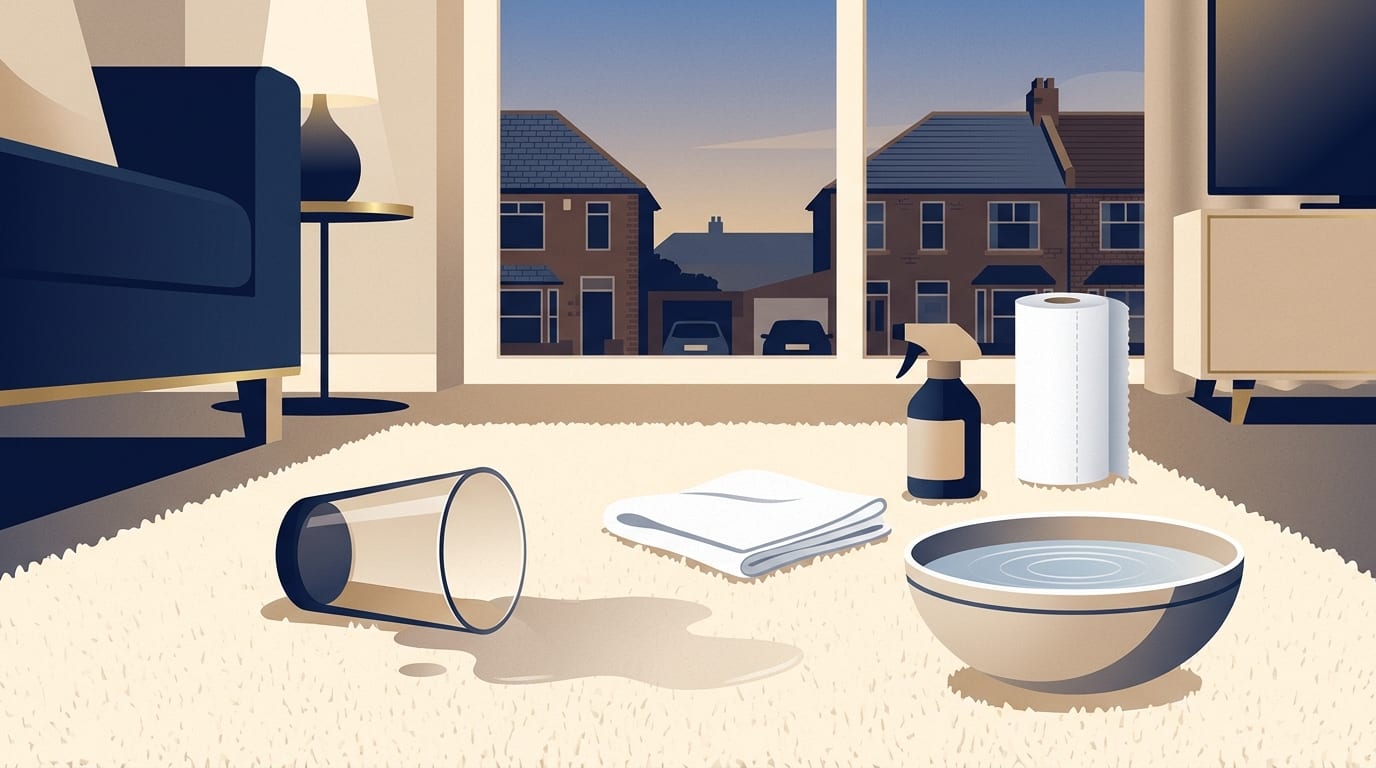
Having the right items ready means you can deal with a spill immediately without panicking. When preparing to tackle a carpet emergency, you should gather these items:
- A supply of clean, light-coloured cloths or plain paper towels for blotting.
- A mild liquid laundry detergent to mix with cool water.
- A standard carpet spray to use if the mild detergent fails.
- A blunt tool like a spoon to carefully scrape away solid matter.
- An enzymatic cleaner designed for pet wee if you have animals in the house.
Using a white cloth helps you see exactly how much of the stain is lifting off the carpet as you press down, so you know when to stop. You will also need a mild cleaning solution. Start gently with a little laundry detergent and water, blotting the stain with your cloth. You only need a very small amount of standard liquid detergent mixed with cool or lukewarm water. Dip your cloth into the mixture, ring it out so it is slightly damp rather than soaking wet, and press it gently against the carpet.
If that fails, you can try a carpet cleaner with a little more power. You should keep a standard carpet spray in your cupboard for these moments, rather than relying on heavy chemicals. Before you apply any new product to the middle of your room, test any cleaning product on a hidden area first to check it will not damage or discolour the carpet. An offcut, a patch under a heavy sofa or a dark corner behind a door are ideal spots for a test.
Wait a few minutes to see how the carpet reacts to the spray. If the colour holds and the texture remains the same, you can use it on the main stain. Always follow the instructions on the bottle, applying just enough to dampen the fibres without soaking the floor underneath.
Removing red wine from carpet
Red wine is a common spill that causes immediate panic, but the standard blotting method is the best way to handle it. Act quickly and grab a dry cloth to soak up as much wine as you can before it settles into the weave. Work steadily from the outside edge of the red patch towards the centre so you do not spread the liquid further across the room.
Household tricks are often suggested for red wine, but bicarbonate of soda is one to avoid. Do not use bicarbonate of soda to clean red wine stains. In testing, it reacted with the wine and left a large patch of carpet with a blue tinge. You should rely entirely on plain blotting, followed by a little laundry detergent and water if the mark remains.
Stick to the basic steps of pressing a clean cloth into the carpet, lifting the moisture, and checking a hidden area before you apply any specific carpet spray. The goal is to lift the wine out of the fibres gently, rather than scrubbing it further into the backing.
Cleaning coffee and tea spills
Hot drinks like coffee and tea spread rapidly when they hit a carpet. Because the liquid is warm and thin, it travels quickly through the top fibres and down into the backing material. You must start blotting immediately to catch the spill while it is still near the surface.
Use the same gentle technique as you would for any other liquid. Carefully scrape, remove and blot away as much of the spill as you can with a dry cloth. Avoid using a lot of water, as this can make some stains worse.
If plain blotting does not remove the brown mark, move on to a little laundry detergent and water. Do not use hot water on the stain, as hot water can make some stains worse. Blot the detergent mix into the carpet, working from the outside in, and check your cloth to see the coffee lifting away.
In Which? testing, the stains were one tablespoon each of coffee, curry, red wine and tomato ketchup. Fresh stains were cleaned within five minutes and dried stains were left overnight. Acting quickly improves the chance of removing a stain.
Dealing with pet urine and sick on carpet
When a dog or cat has an accident on the carpet, you need to clean the area thoroughly so smells are removed. Pets have a strong sense of smell, so removing the scent matters as well as removing the stain.
You must use an enzymatic cleaner, which is often labelled pet odour remover, ideally one designed for pet wee. Other household cleaners or disinfectants are not effective enough at removing the scent, meaning your pet will still know the accident happened.
Always make sure any products used are dog friendly. Read the label carefully to confirm it is safe to use around animals, and keep your pets out of the room while the carpet is drying. If you think your dog has swallowed something toxic from a cleaning product, contact your vet right away for medical advice.
For pet sick or blood, the same rule of speed applies. Carefully scrape, remove and blot away as much of the spill as you can without rubbing it into the pile. Check your carpet label or check with the manufacturer for advice, and test any product on a hidden area first.
If accidents continue or start suddenly, book a vet check to rule out medical causes. A vet check can rule out medical causes.
Stains that come back the next day
Sometimes you will clean a spill, watch the mark disappear, and feel confident the job is done. However, some stains tend to reappear once the spray has completely dried.
Tough stains may need reapplying with your chosen cleaning product. A stain that looked gone can return once the product has fully dried, so do not assume the job is finished.
Check the next day to see if the area is still clear. Leave the carpet to dry naturally overnight without walking heavily on it. If you wake up and see a faint outline of the original spill, you will need to repeat the cleaning process.
Start gently again with a little laundry detergent and water, or use your stronger carpet cleaner if you have already tested it safely. Blot the area just as you did the first time, working from the outside in. It may take a couple of attempts.
Things that make a carpet stain worse
Using the wrong method or the wrong product can turn a minor accident into a permanent mark. Adding heat, rubbing the fibres or applying harsh chemicals without testing will damage your floor. Knowing what to avoid is just as important as knowing what to apply.
This table outlines the correct first steps for difficult spills and the common mistakes you must avoid.
|
Stain type |
What to do first |
What to avoid |
|---|---|---|
|
Red wine |
Carefully scrape, remove and blot away as much as you can |
Do not use bicarbonate of soda to clean the stain |
|
Paint |
Test any cleaning product on a hidden area first |
Avoid heat or steam, which can set the stain |
|
Candle wax |
Use a cloth or brown paper between the iron and the carpet |
Do not put the iron directly on the carpet |
|
Nail varnish |
Test an acetone based remover in a hidden area first |
Do not use without testing, as it can damage or discolour the carpet |
These are general cautions, so check the carpet label or the maker's advice for your carpet.
For paint, avoid heat or steam, which can set the stain, and persistent paint may need professional cleaning. For candle wax, do not put the iron directly on the carpet and use a cloth or brown paper between the iron and the carpet. For nail varnish, test an acetone based remover in a hidden area first as it can damage or discolour the carpet.
When to call a professional carpet cleaner
There are times when a domestic cleaning spray and a cloth will not be enough to save your floor. If you are dealing with old, large or repeated stains that have dried into the fibres over several months, a surface wipe will not lift the dirt. Old or deeply set marks are often better left to a professional.
You should also seek help if you have wool or delicate carpets, or if you are uncertain about the fibre type. A professional can check the fibre type before choosing a method, although no clean can promise a stain will come out.
Persistent paint may need professional cleaning, especially if it has dried hard into the pile. If you have tried the gentle laundry detergent method and tested a stronger carpet spray without success, it is time to stop. Continuing to scrub or applying more chemicals will only fray the carpet and make the damaged area more obvious to anyone walking into the room.
Before you book a service, you can check typical carpet cleaning prices to understand what the job might cost. You can also read about professional carpet cleaning to see how a technician will assess the stain, protect your furniture and extract the dirt on the day.
Common questions
Does hot water help lift a carpet stain?
No, you should avoid using a lot of water, or hot water, as this can make some stains worse. You should start gently with a little laundry detergent and cool or lukewarm water instead.
Why do some marks reappear after cleaning?
Some stains tend to reappear once the spray has completely dried Tough ones may need reapplying, so you should check the next day to ensure the floor is clear. If the mark has returned, blot the area again with a little laundry detergent and water.
What happens if a pet cleaning product is toxic?
You must make sure any products used are dog friendly before you apply them to your floor. If you think your dog has swallowed something toxic from a cleaning product, contact your vet right away for advice. Always keep animals out of the room until the treated carpet is completely dry.
Will scrubbing remove a dried mark faster?
You should not rub the stain too aggressively, as this can damage the carpet fibres and leave a worn patch. Always carefully scrape, remove and blot away as much of the spill as you can with a pressing motion. Pressing firmly with a cloth lifts the liquid without destroying the texture of the carpet.
How quickly should a spill be cleaned?
You must act quickly to improve the chance of removing a stain before it sinks into the backing. In consumer testing, fresh stains were cleaned within five minutes, while dried stains were left overnight. Catching a spill in the first few minutes gives the best chance of removing it.
Next steps for a clean carpet
Dealing with a spill effectively comes down to fast action and gentle methods. Follow this checklist next time you face a carpet emergency in your home:
- Act quickly and grab a clean, dry cloth to soak up the liquid.
- Carefully scrape, remove and blot away as much of the spill as you can.
- Work the stain from the outside in to avoid spreading it further.
- Test any cleaning product on a hidden area first to check for damage.
- Start gently with a little laundry detergent and water before trying stronger sprays.
- Check the next day to see if the mark has reappeared as the carpet dried.
- Use an enzymatic cleaner for pet accidents so smells are removed thoroughly.
If the mark refuses to lift or you are dealing with a delicate wool pile, bringing in a specialist is the safest option. A technician can assess the carpet and the fibre before choosing a method. Take a moment to find a house cleaner near you who can assess the floor and get your home looking its best again.
Find a top rated house cleaner near you
2,880 house cleaners across the UK, each ranked on their Google rating and the number of reviews behind it. Start with your county: