Cleaning up after a flood or a heavy leak is a stressful job that requires strict safety checks before you begin. Flood water can contain sewage and hide debris, so protect your health and follow a clear order of steps. Check it is safe to return, document the damage for your insurer and then clean carefully.
Safety first and who to call
When a severe leak or flood hits, your absolute first priority is the immediate safety of everyone in the household. Do not enter the property until you have checked with the emergency services that it is safe to return. GOV.UK says flood water can hide debris, and it asks you to check with the emergency services that it is safe to return before you go in.
Once you are allowed inside, never turn on your water, gas or electricity. Water, gas and electricity supplies may have been affected. You must have your utility company or a qualified engineer confirm that your supplies are safe before you attempt to use them.
If you are dealing with a widespread local flood rather than an isolated plumbing leak, you can call Floodline on 0345 988 1188 for advice and updates. Floodline is open 24 hours a day. Guidance differs in Scotland, Wales and Northern Ireland. If you live outside England, you will need to check the specific rules for your nation. You can find this tailored advice through mygov.scot in Scotland, Natural Resources Wales, and nidirect in Northern Ireland.
Document the damage before you clear anything
GOV.UK says to contact your insurer to start a claim. Doing that early means you can ask what they need from you before you touch anything.
Do not start clearing away ruined items or sweeping out standing water right away, no matter how strong the urge is to start cleaning. Your first practical step is to document the entire scene for your insurance claim. Read the official government guidance on what to do after a flood to ensure you do not miss a vital step in this early process.
Take clear, well lit photographs of the water damage across every single affected room. You must capture the flood water line on the walls and doors. GOV.UK says to photograph the flood water line as well as the damage. Photograph damaged furniture, ruined carpets and broken personal items exactly where they are resting.
Before you throw anything into a skip or move it outside into the garden, ask your insurer what you are allowed to move or throw away. Ask your insurer first, as GOV.UK advises. It is sensible to keep a written record of who you spoke to at your insurance company. Write down the exact date, the time of the call, and list precisely what they agreed you could safely discard.
Floods and leaks are treated differently by insurers
Which? explains that the cover depends on where the water came from. Flood cover applies to floodwater entering from an external source, such as a river bursting its banks, storms and high tides or heavy rainfall.
Leaks that start inside your property are handled under different parts of your home insurance policy. Which? says escape of water cover applies to plumbing leaks from general wear and tear. What any policy will pay depends on its terms, so ask your insurer about your own policy.
If the water damage is severe and the property is unsafe, Which? says policies generally include cover for temporary accommodation if your home is made uninhabitable. Ask your insurer what your own policy includes.
If your insurer is not helping, or if they refuse a valid claim unfairly, you must first exhaust their internal complaints process. If that formal process fails to resolve the issue to your satisfaction, you can take the matter to the Financial Ombudsman.
Protecting your health while you clean
Flood water can contain sewage and hide debris. GOV.UK says the right protective clothing is important.
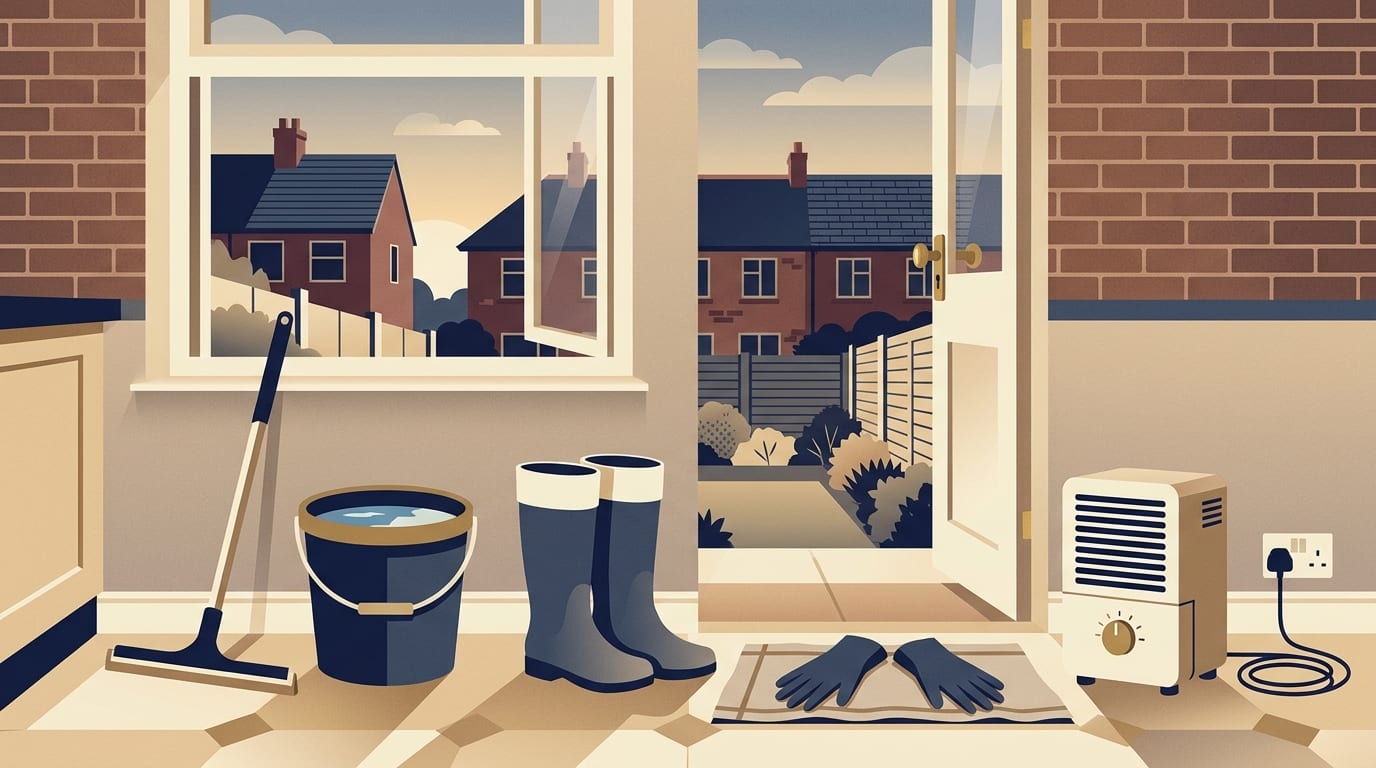
The government issues flooding and health advice for the public to help you dress safely for the cleanup. GOV.UK lists this protective gear:
- Thick rubber boots to protect your feet against hidden sharp objects under the water.
- Protective overalls or a heavy waterproof apron to shield your everyday clothing.
- Thick waterproof gloves to keep contaminated water and sewage off your hands.
- A fitted face mask if your cleaning involves scrubbing, hosing or pressure washing.
- Clear eye protection to stop dirty water splashing into your eyes during heavy cleaning.
Hygiene is critical during the physical cleanup of your home. Wash your hands thoroughly with warm water and soap after every single cleaning session and after any direct contact with flood water. If you have any open cuts, grazes or scratches, cover them completely with waterproof plasters before you put your gloves on.
Keep your dirty cleaning clothes completely separate from your normal household laundry. GOV.UK says to wash clothes used for cleaning separately, and to wash clothing, bedding and toys on a 60-degree cycle with detergent.
Cleaning hard surfaces, textiles and kitchen items
GOV.UK says to clean hard surfaces that touched floodwater, including walls and flooring, with hot water and detergent.
Kitchens need extra care. You must clean and disinfect all worktops, crockery and cooking items before using them to prepare food again. If you are unsure how to tackle the space safely, reading about how to deep clean a kitchen will help you plan the work effectively.
Do not rely on your dishwasher to sanitise contaminated plates and pans straight away. GOV.UK says a dishwasher can sanitise kitchen items only if a qualified technician has cleared it.
GOV.UK says to discard wooden boards and utensils if floodwater contaminated them.
Drying out and why ventilation matters
GOV.UK says heating, dehumidifiers and good ventilation can help to dry out your home.
GOV.UK says to keep the thermostat at 20 to 22 degrees. You must have your gas or oil central heating checked by a qualified engineer before you turn it on for the first time.
Never run petrol or diesel generators, or any similar fuel driven equipment, indoors. GOV.UK gives carbon monoxide as the reason.
Do not use any gas or electrical items that may have got wet during the flood. Have them checked by a qualified technician first.
What to throw away and what to ask the council
Do not eat food that has touched flood water.
GOV.UK gives these rules for food and water:
- Discard all food in your fridge if the power was off for more than four hours.
- Discard all food in your freezer if the power was off for more than 24 hours.
- Stop using your tap water if its colour, taste or smell changes in any way, and contact your local water company for urgent advice.
GOV.UK says most items can go in the bin unless they are contaminated by sewage or chemicals. For contaminated items, contact your local council about hazardous waste.
When mould persists and a specialist cleaner is needed
Damp conditions inside a flooded house are the perfect breeding ground for mould spores. GOV.UK says mould should disappear as the home dries.
If mould persists after the home has dried, do not try to deal with it yourself.
GOV.UK says that if mould persists, contact a specialist cleaner. For general background, read about removing black mould. No cleaner can guarantee mould will not return.
What to ask before hiring a cleaning or restoration firm
A cleaner can help with the hard surfaces, kitchen items and clothing once the home has been confirmed safe, but they cannot make safe the gas, electricity or water supplies, and they cannot decide what your insurer will accept. Those jobs belong to a qualified engineer and to your insurer. Ask the firm to confirm in writing what it will and will not do.
Cleaning up after a major flood is physically exhausting and often requires professional help. You can hire specialist restoration firms or experienced deep cleaners to handle the heavy sanitation and drying process for you.
Always ask for written quotes that detail exactly what the cleaning firm will do in each room. A written quote gives you something to compare and to show your insurer.
Ask the firm whether it works with your insurer, and ask your insurer what it will accept before you agree anything.
Check what drying equipment the firm provides, whether it is included in the quote and how long the firm expects to need it. To vet a company, read the guide on how to choose house cleaning services before you sign an agreement.
Common questions
Are landlords responsible for flood cleaning in rented homes?
This depends on your tenancy agreement and what caused the damage. Ask your landlord, your own contents insurer or a housing charity about your situation. Flood cover applies to water entering from an external source, while leaks from within a property are handled under other parts of a policy, so the cause of the water matters.
How long does a house take to dry out after a flood?
Heating, dehumidifiers and good ventilation can help to dry out your home, and the thermostat should be kept at 20 to 22 degrees. Ask a specialist cleaner or your insurer how long it may take in your home. Mould should disappear as the home dries. If it persists, contact a specialist cleaner.
Can I use bleach to clean up flood water?
The official government advice is to clean hard surfaces with hot water and standard detergent. Do not mix different cleaning products. Clean and disinfect worktops, crockery and cooking items before using them with food.
Do I have to move out during a flood cleanup?
Check with the emergency services whether it is safe to be in the property. Policies generally include temporary accommodation if your home is made uninhabitable, so ask your insurer about your own policy. Floodline on 0345 988 1188 is open 24 hours a day if you need advice.
Next steps
Before you start clearing away the damage, make sure you follow this strict order of actions to protect your health and your insurance claim:
- Check with the emergency services that it is safe to return.
- Leave the water, gas and electricity switched off until a qualified engineer checks them.
- Photograph the flood water line and all damaged possessions exactly where they are resting.
- Ask your insurer what items you can move or throw away.
- Put on thick rubber boots, waterproof gloves and overalls before you touch any flood water.
- Contact your local council if you need to dispose of items contaminated by raw sewage.
Cleaning a flooded home requires immense patience, the right protective gear and careful coordination with your home insurer. Once your property is completely dry and structurally sound again, you can find a house cleaner near you to help get your home back to its normal, comfortable routine.
Find a top rated house cleaner near you
2,880 house cleaners across the UK, each ranked on their Google rating and the number of reviews behind it. Start with your county: