If you are planning to use a steam cleaner to clean a couch, the one rule you must follow is to look at the care label before anything gets wet. Fabric sofas react differently to heat and moisture, and using steam on the wrong material will ruin it. A steam cleaner can freshen upholstery and lift out dirt, but only if the manufacturer says the fabric is safe to wash with water.
Check the care label first
Before you do anything else, you must locate and read the care label on your sofa. This label is the only way to know what the manufacturer recommends for cleaning the fabric safely. Following the label will ensure you do not permanently damage the material. Look for the label on the sofa itself before you start.
The label will carry a specific Which? cleaning code. These codes tell you exactly what type of cleaning product is safe to use on the upholstery. The table below compares the cleaning code options found on a typical care label.
|
Code |
Meaning |
|---|---|
|
W |
Can be cleaned with water based solutions |
|
S |
Should be cleaned with solvent based cleaners |
|
WS |
Can be cleaned with either |
|
X |
Vacuum only |
Check the label itself, as the code is the maker's instruction for that sofa.
The codes are simple letters, but they dictate your entire cleaning method. If your sofa has a W code, it can be cleaned with water based solutions. An S code means the fabric should be cleaned with solvent based cleaners only. A WS code gives you more flexibility, as the material can be cleaned with either water based solutions or solvent based cleaners. An X code is the most restrictive, meaning the sofa is vacuum only.
Sometimes these tags become faded or frayed over the years. If the print is too worn to read, or if your sofa has no care label at all, the right method is unclear. Check with the maker or the retailer who sold you the furniture rather than guess. Following the label is what avoids permanent damage, so a wrong guess could ruin the fabric.
Is a steam cleaner right for your sofa
A steam cleaner pushes hot vapour and moisture into the fabric to lift dirt. Because of this, you must only use a steam cleaner if the care label has a W or a WS code. These are the only two codes that confirm the sofa is safe to get wet.
If your sofa has an S or X code, do not use a steam cleaner, because steam is only for W or WS codes. An S code means solvent based cleaners and an X code means vacuum only.
Even when you have a W or WS code, you must still treat the sofa with care. The fabric is safe to get wet, but that does not mean it should be saturated. The goal is to use the steam to loosen surface dirt without soaking the upholstery right through to the padding underneath.
Prepare the sofa
Before you apply any moisture, you must remove all the loose dust and dirt from the fabric. Which? advises vacuuming first.
Start by vacuuming and dusting the whole piece of furniture. You should use the soft brush attachment on your vacuum cleaner for this job. The soft bristles will gently agitate the fabric to release trapped dust without snagging or pulling the threads. Take the nozzle into the crevices where the seat meets the backrest.
If your sofa has removable cushions, take them off before you begin. This allows you to vacuum the base of the sofa where crumbs and debris fall. Once the cushions are off, vacuum both sides of each one. Getting the dry dirt off both sides ensures the fabric is completely clear before you bring the steam cleaner near it.
Do a patch test
Even with a W or WS care label, you must test any cleaning product on a small, hidden spot to see whether it leaves marks. Fabrics age and fade over time, and a product that is generally safe might still cause a reaction on your specific sofa.
Choose an area of the fabric that is out of sight. The back of the sofa near the bottom edge or the underside of a matching cushion are good places to run a test. Apply a small amount of your chosen cleaning product to this hidden spot.
You must also patch test the steam cleaner itself by running the steamer over the small area. Once you have applied the steam and the product, you must let the spot dry completely. Do not rush this step by using a hairdryer, as you need to see how the fabric dries naturally in the room air. Only when the fabric is entirely dry will you be able to see if the cleaning method has left a water ring, changed the colour or altered the texture of the material.
Step by step method to steam in sections
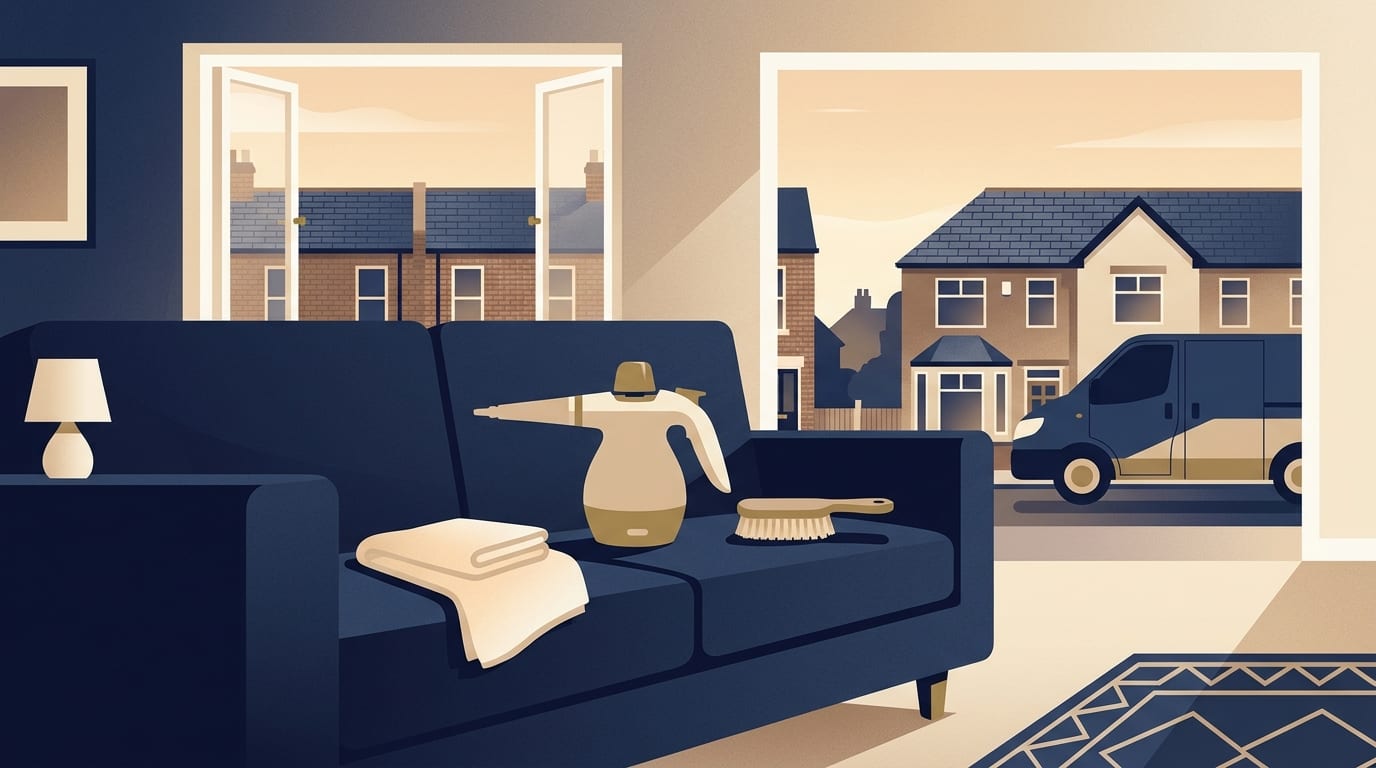
When you are ready to clean the whole sofa, following a set method keeps the work organised and prevents the fabric from getting too wet. You should always follow your machine's own instructions for filling and operating the steamer.
- Check the care label to confirm the fabric has a W or WS code, ensuring it is safe to get wet.
- Vacuum the sofa thoroughly using the soft brush attachment, removing the cushions to clean both sides if you can.
- Pre treat any visible stains by dabbing gently with a clean cloth and warm water mixed with a little mild detergent or fabric cleaner.
- Test your cleaning product and the steam cleaner on a small, hidden spot and let it dry completely to check for marks.
- Work in sections across the fabric with the steamer to prevent streaks from forming.
- Hold the steamer over stubborn marks for a few extra seconds to help lift the dirt.
- Blot the fabric with a microfibre cloth to remove excess moisture as you clean.
- Leave the sofa to air dry in a well ventilated room.
Steaming without soaking the fabric
When you use the steam cleaner, work in sections across the fabric. Tackling one complete cushion or one armrest at a time helps to prevent streaks. Working in sections is the way to prevent streaks.
For general cleaning, keep the steamer moving steadily over the fabric. If you come across stubborn marks, hold the steamer over them for a few extra seconds. The concentrated heat and moisture will help to break down the dirt, making it easier to lift away.
As you finish each section, blot the area with a microfibre cloth. This is a crucial step to remove excess moisture. Blotting firmly rather than rubbing keeps the fabric safe while leaving the sofa as dry as possible.
Treating stains and smells
Stains need attention before you run the steam cleaner over the sofa. To pre treat a stain, dab it gently with a clean cloth and warm water mixed with a mild detergent or a dedicated fabric cleaner. You may need to repeat this dabbing process several times for older, dried marks until the cloth comes away clean.
You must resist the urge to scrub the mark. Scrubbing will rough up the fibres and you could damage the fabric permanently. Gentle dabbing lifts the stain into the cloth without destroying the weave.
If your sofa has strong odours, the type of smell dictates how you treat it. Enzyme cleaners only work if the smell comes from a natural source. This includes odours from pets, pet urine or vomit. Other smells, such as those from smoke or cooking, are not covered by that advice.
For deeper smells and overall freshening, rented machines can also help. You can hire carpet, steam or ozone cleaners to tackle stubborn odours. If you use a rented machine, you must follow the instructions provided with it and spot test the process where possible before cleaning the whole piece of furniture.
Drying the sofa properly
Once the cleaning is finished, you must dry the sofa quickly to prevent a mildew smell. If the fabric stays damp for too long, it can develop a mildew smell.
The best way to dry the sofa is to air dry it in a well ventilated room. Open the windows to let fresh air circulate around the wet fabric. You can also ventilate the space by opening internal doors to create a draft through the house.
If the weather is cold or damp, use the central heating if you can. A warm, well ventilated room will dry the fabric steadily and safely.
You must avoid using a portable heater or a hairdryer to speed up the process. While it is tempting to blast a wet patch with direct heat, the sofa's material could be sensitive to heat so keep heat away from it. Let the air and the ambient room temperature do the work.
How often to deep clean
Keeping a fabric sofa in good condition requires a mix of routine care and occasional deep cleaning. For everyday maintenance, vacuum the upholstery regularly to stop dust from settling into the weave.
If you spill something, spot clean the stains as soon as you notice them with a clean cloth. Fresh marks are much easier to dab away than stains that have been left to dry and set into the padding.
For a full refresh, you should deep clean and deodorise the sofa once or twice a year. This once or twice a year clean goes further than a vacuum, helping keep the upholstery fresh. If you share your home with pets and children, the sofa will endure much heavier use, and you will need to deep clean the fabric more often to keep it hygienic.
When to book a professional instead
A steam cleaner is a useful tool, but it is not the right choice for every piece of furniture. You should book a professional upholstery cleaner rather than attempting the job yourself under the following conditions.
- The care label displays an S or X code.
- The sofa is made of leather, velvet or suede.
- There are large stains that a mild detergent cannot lift.
- The fabric has endured years of heavy use and needs extraction cleaning.
For these, a professional is the safer choice. You can check sofa and upholstery cleaning costs to see what a professional visit will involve and how it is priced.
Common questions
Can I use vinegar in my steam cleaner?
You should follow your machine's instructions regarding what solutions can be added to the water tank. If you plan to use vinegar on the fabric, you must use it as a patch tested option on a hidden spot first and let it dry completely to ensure it does not leave marks.
Will a steam cleaner kill germs and dust mites on my sofa?
While steam is hot, you should not rely on a quick pass with a domestic steam cleaner to kill germs or mites deep in the upholstery. The main purpose of steam cleaning a sofa is to loosen visible dirt and freshen the fabric safely without soaking it.
How long does it take for a couch to dry after steam cleaning?
Drying times vary depending on the fabric and how well ventilated the room is. You must dry the sofa quickly to prevent a mildew smell by opening windows and using heating if you can, but you must avoid using a hairdryer or direct heater as the material could be sensitive to heat.
Does steam cleaning remove pet smells from a fabric sofa?
Steam cleaning can help freshen the fabric, and rented machines such as steam or ozone cleaners can also help with odours, using the maker's instructions and a spot test. However, if the smell comes from a natural source like pet urine or vomit, enzyme cleaners only work on smells from a natural source.
Next steps for cleaning your sofa
Before you start working on your upholstery, make sure you have everything ready for a safe clean.
- Find the care label and confirm the fabric is coded W or WS.
- Vacuum the entire sofa with a soft brush attachment.
- Pre treat any stains by dabbing them gently with mild detergent.
- Patch test your steam cleaner and products on a hidden spot.
- Wait for the patch test to dry completely to check for marks.
- Plan to work in sections and have microfibre cloths ready for blotting.
- Open the windows to ensure the room is well ventilated for drying.
If your sofa has an S or X label, or is made of a delicate material that you do not want to risk washing yourself, a professional service is the safest route. You can find a house cleaner near you to assess the fabric and clean the furniture using the correct extraction methods.
Find a top rated house cleaner near you
2,880 house cleaners across the UK, each ranked on their Google rating and the number of reviews behind it. Start with your county: